

Understanding QX Trading: A Complete Guide
Explore QX Trading essentials 📊, from market strategies to platform tech & regulations. Perfect guide for traders in India aiming to expand skills 🚀.
Edited By
Charlotte Bennett
Derivative trading forms a significant part of India’s financial markets. It refers to trading in contracts whose value depends on an underlying asset, such as stocks, commodities, or market indices. Unlike buying the asset itself, derivatives allow you to speculate, hedge risks, or gain exposure with relatively smaller capital.
For example, instead of buying shares of Reliance Industries, a trader might buy a futures contract based on Reliance’s stock price. This contract obliges the buyer to purchase the shares at a specified price on a future date. Traders can benefit from price changes without owning the shares outright.
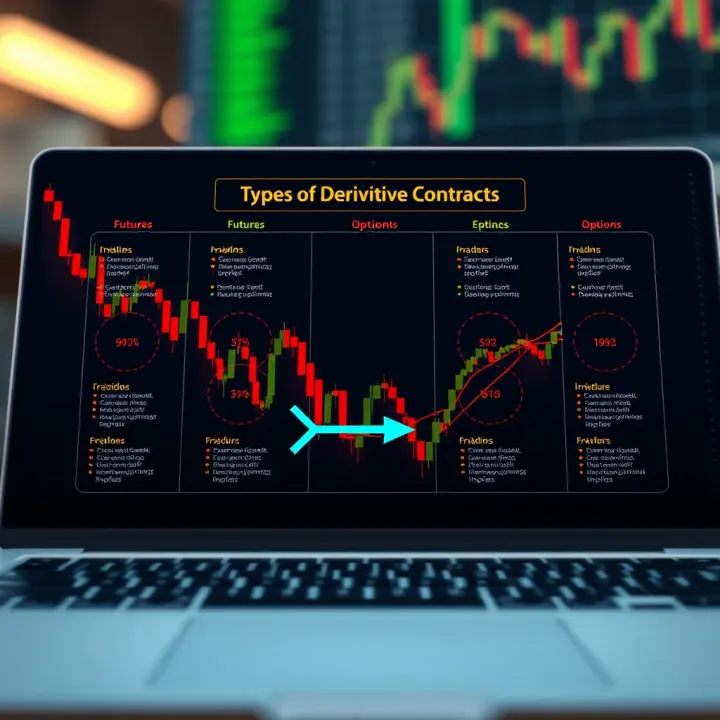
Futures: Agreements to buy or sell an asset at a predetermined price and date.
Options: Contracts that give the holder the right, but not the obligation, to buy or sell an asset.
Swaps: Agreements to exchange cash flows or financial instruments.
In India, derivatives trading is regulated by the Securities and Exchange Board of India (SEBI) and primarily takes place on exchanges like NSE and BSE for equity derivatives, and MCX and NCDEX for commodities.
Understanding these contracts and how their prices behave is critical before entering derivative markets, especially given their leveraged nature which can amplify gains as well as losses.
Derivatives serve multiple roles. They help investors hedge price risks—farmers locking in commodity prices or investors protecting portfolio value during market swings. Traders use derivatives to leverage their bets, aiming for higher returns with less capital. Institutions manage large portfolios more efficiently by using derivatives to adjust exposure swiftly compared to buying or selling the underlying assets.
This article will guide you through the essential concepts, practical trading strategies, risk management techniques, and regulatory frameworks you need to know for trading derivatives confidently in the Indian markets.
Understanding derivatives is key for traders and investors who want to navigate Indian financial markets more effectively. This introduction explains what derivatives are, their underlying assets, and why they have become increasingly relevant in managing risk, speculation, and arbitrage in today’s dynamic market environment.
A derivative is a financial contract whose value depends on an underlying asset. Instead of owning the asset directly, traders use derivatives to gain exposure to price movements. For example, futures contracts on crude oil or options on Nifty index let investors participate in price changes without buying the physical commodity or stocks.
This mechanism allows market players to manage risks or speculate with smaller capital outlays than buying the asset outright. The contract’s worth rises or falls as the underlying asset’s price moves, making derivatives useful tools for hedging or profit-making.
Derivatives link to a variety of assets such as stocks, bonds, commodities (like gold, oil, or agricultural products), currencies, or market indices. Consider a farmer growing wheat; he can use futures contracts to lock in prices before harvest, protecting against sudden price drops. Similarly, a stock investor might trade options to hedge against expected volatility.
The diversity of underlying assets broadens derivative utility — it is not just for big businesses but also for individual investors and traders who want to manage exposure across various sectors.
Derivatives act as insurance against adverse price movements. For instance, commodity traders locking in prices through futures can avoid losses when the market turns volatile. This helps in planning business costs accurately, particularly in sectors like agriculture or manufacturing.
In Indian equity markets, portfolio managers often use options to hedge portfolios against sudden market corrections, reducing potential downside.
Derivatives invite speculation as they allow leveraged positions. A trader betting on the rise of the Nifty index can buy call options with limited capital, aiming to multiply gains if the market moves as predicted. However, this leverage also increases the risk of significant losses.
Speculators thus play a role in market liquidity but must carefully weigh potential rewards against associated risks.
Arbitrage involves exploiting price differences of the same asset across different markets or forms. Derivatives facilitate arbitrage by letting traders simultaneously buy and sell related contracts to earn risk-free profits.
For example, a trader may notice a pricing discrepancy between the spot price of a stock and its futures contract on the NSE. By taking offsetting positions, the trader can capture the gap until prices converge.
Derivatives not only help in managing risk but also in enhancing market efficiency by narrowing price gaps through arbitrage.
This overview sets the stage to explore further details about types of derivatives, trading strategies, risks, and Indian regulations in subsequent sections.
Derivative instruments are the backbone of modern trading and risk management. They allow traders and investors to take positions based on the future price movement of an asset, without owning it outright. Understanding the main types of derivatives is vital because each serves different needs—whether hedging risk, speculating, or arbitraging price differences. In India, derivatives primarily involve instruments like futures, options, swaps, and forwards, traded mostly on stock and commodity exchanges.
Futures contracts are agreements to buy or sell an asset at a predetermined price on a specific future date. These contracts are standardised and traded on organised exchanges, making them highly liquid. They work by locking in prices to protect against fluctuations. For example, a farmer might sell wheat futures to ensure a fixed price before harvest, guarding against a fall in market prices.
In Indian markets, futures are common in stocks, indices, commodities, and currencies. For instance, Nifty futures allow investors to bet on the overall direction of the Indian stock market. Similarly, commodity futures like those on gold or crude oil help players hedge or speculate. Exchanges such as the National Stock Exchange (NSE) and Multi Commodity Exchange (MCX) offer active futures trading, with set contract sizes and expiry dates, ensuring transparency and regulation.
Options give the buyer the right, but not the obligation, to buy or sell an asset at a fixed price within a set period. A call option allows purchase, while a put option permits selling. These instruments add flexibility compared to futures because you can choose to exercise the option only if profitable.
For example, if you buy a call option on Reliance Industries shares with a strike price of ₹2,400, and the stock price rises to ₹2,600, you can buy shares at ₹2,400 and benefit from the difference. If the price falls, you lose only the premium paid for the option, limiting risk.
Common strategies include covered calls, protective puts, and spreads. Traders use these to generate income, hedge existing positions, or speculate on directional moves with limited downside. Options enable nuanced plays in volatile markets, which is why they attract many Indian equity and derivatives traders.
Swaps are customised contracts exchanged over the counter (OTC) where two parties swap cash flows or financial instruments, often to manage interest rate or currency risks. Forwards are similar to futures but non-standardised, negotiated privately between counterparties.
In India, swaps mostly appear in interest rate and currency management between banks, corporations, and financial institutions to hedge against fluctuating borrowing costs or exchange rates. For example, a company borrowing in foreign currency might use currency swaps to mitigate exchange risk. Forwards serve similar practical needs in commodities and foreign exchange, though they carry more counterparty risk than exchange-traded futures.
Understanding these main derivative types helps you grasp the toolkit traders use to control risk, seize opportunities, and optimise portfolios. Each instrument has its purpose, advantages, and potential pitfalls, so choosing the right one depends on your trading objectives and risk appetite.
Strategies and techniques form the backbone of derivative trading, allowing traders and investors to align their objectives with market realities. Without a clear strategy, trading derivatives can become like sailing without a compass—highly risky and unpredictable. This section highlights how various approaches like hedging, speculation, and arbitrage help manage risks and capitalise on opportunities in Indian markets.
Hedging is about protecting investments using derivatives against adverse price movements. For example, an equity investor holding shares of Reliance Industries may buy put options as insurance to limit losses if the stock price falls sharply. This approach provides a safety net and helps maintain portfolio stability during volatile periods.
In commodity markets, producers and consumers routinely use futures contracts to lock in prices. A farmer growing wheat might sell wheat futures to guarantee a fixed price before the harvest, shielding against downside price fluctuations at the selling time. Similarly, a flour miller can buy wheat futures to cap costs and avoid sudden price hikes. These practices reflect practical risk management embedded in everyday business operations.
Derivatives allow traders to leverage positions for higher gains without needing full upfront capital. For instance, an intraday trader might buy call options on the Nifty 50 index expecting a sharp rally. Even a small increase in the index can lead to disproportionate profit due to leverage inherent in options.
That said, this same leverage magnifies losses if the market moves unfavourably. Speculation in derivatives demands vigilance and a clear exit plan because margins and mark-to-market losses can wipe out capital quickly. Many new traders underestimate these risks, leading to sizeable losses, especially in volatile conditions.
Arbitrage involves spotting price inefficiencies between related markets or instruments and profiting from simultaneous buying and selling. In India, traders often look at price differences between spot and futures contracts on exchanges like NSE and BSE.
Executing arbitrage trades requires swift action and sufficient liquidity. For example, if Nifty futures trade at a premium beyond the cost of carry, traders can buy the underlying stocks and sell futures, locking in risk-free profits. However, transaction costs, taxes, and timing challenges mean pure arbitrage opportunities are rare and short-lived, calling for experience and efficient systems.
Understanding and applying these strategies properly can help traders navigate the complex derivative markets with more confidence and control over risks.
These techniques are integral for anyone aiming to trade derivatives effectively in Indian markets, combining practical risk management with the pursuit of profitable opportunities.
Derivative trading comes with several risks and challenges that every trader and investor must understand. Unlike straightforward equity trading, derivatives amplify both potential gains and losses due to their unique features. Recognising these risks can help you manage your positions smartly and avoid unpleasant surprises.
Volatility and leverage effects play a major role in how derivative prices fluctuate. Volatility refers to the rapid and often unpredictable price movements of underlying assets. Derivatives, especially futures and options, are sensitive to such swings because they use leverage, meaning you control a large asset value with a relatively small investment. While leverage can enhance profits, it equally magnifies losses. For example, if you buy a futures contract on Nifty and the index moves unfavourably by just 1%, you might lose several times that on your invested margin, wiping your capital out quickly if not managed correctly.
Leverage also tightens the margin requirements. Brokers ask for an upfront margin to cover potential losses, which fluctuates based on volatility. If volatility spikes, margin demands rise, forcing traders to put in more capital or risk position liquidation. This margin call can strain your liquidity, especially during turbulent market phases.
Impact on margin requirements is crucial to understand because it directly affects your trading capital. The Securities and Exchange Board of India (SEBI) adjusts margin rules regularly to safeguard market stability. Suppose you hold an options position on crude oil, and sudden geopolitical tensions increase volatility. Your broker will demand higher margins, reducing your leverage and potentially triggering forced exits if you cannot meet these calls. Managing your cash reserves and keeping a buffer for such margin hikes protects you from being caught off-guard.
Risk of default refers to the possibility that the other party to your derivative contract may fail to honour their obligation. In India, this risk is limited in exchange-traded derivatives due to the clearinghouse system, which guarantees contract settlement. However, in over-the-counter (OTC) derivatives, such as certain swaps or forwards, the default risk is higher as transactions are between two parties without an intermediary. Always assess the creditworthiness of your counterparty in such cases to avoid losses.
Liquidity constraints in trading arise when you cannot enter or exit a derivative position easily at the desired price. Illiquid contracts or offbeat expiry dates can cause wide bid-ask spreads, pushing your trading costs higher. For example, while Nifty derivatives are highly liquid, fewer traders operate in commodities like cardamom or jute futures, leading to challenges in executing timely trades. Lack of liquidity can trap you in adverse positions, especially during market stress when you need quick exits.
Understanding these risks upfront equips you to develop sound trading plans, manage capital wisely, and use proper risk controls like stop-loss orders. Always trade derivatives with a clear sense of the risks involved.
In summary, volatility combined with leverage alters risk profiles significantly, margin changes impact your funding needs, counterparty defaults are a concern mainly off-exchange, and liquidity affects your ability to trade seamlessly. A practical grasp of these helps you navigate derivative markets with greater confidence and control.
The regulatory framework and the trading platforms in India shape how derivatives operate within the market. Understanding these elements helps traders navigate safely and leverage opportunities while staying within legal boundaries. Indian authorities have worked steadily to bring transparency and stability to derivative trading through rules and robust trading venues.
The Securities and Exchange Board of India (SEBI) controls the rules around derivatives trading. It enforces regulations covering contract specifications, margin requirements, settlement cycles, and permissible derivative instruments. For example, SEBI defines maximum leverage limits and mandates margins to protect traders and the market from excessive risks. These regulations prevent market manipulation and promote fair price discovery.
Investor protection also forms a big part of SEBI’s regulations. Compliance mechanisms include clear disclosure norms and stringent surveillance of trading activities. SEBI ensures brokers and exchanges follow best practices, reducing fraud risks. It also requires investor education initiatives, so traders are aware of derivative risks and proper trading conduct.
SEBI’s oversight reinforces market confidence, making derivative trading safer for participants of all levels.
The National Stock Exchange (NSE) and Bombay Stock Exchange (BSE) lead India’s derivatives market. Both exchanges provide futures and options trading for equities, indices, commodities, and currencies. NSE derivatives segment, for instance, widely serves retail and institutional traders with products like Nifty and Bank Nifty futures.
These platforms are technologically advanced, offering high-speed order execution, risk management tools, and real-time market data. Their trading interfaces are designed for ease—from seasoned analysts using algorithmic strategies to freshers starting with basic options. Mobile and web applications further expand access, letting traders monitor positions and place orders anytime.
The exchanges continuously upgrade their systems to enhance security and reduce latency, benefiting derivative traders dealing with time-sensitive trades. Efficient dispute resolution systems also strengthen user trust.
Understanding the regulatory environment and familiarising oneself with major trading platforms like NSE and BSE is essential before venturing into derivative trading in India. This knowledge equips you to trade responsibly and make the most of local market structure and protections.
Derivative trading can appear complex initially, especially for beginners navigating contract details, risk management, and operational rules. Practical tips help you build a strong foundation, avoid common pitfalls, and trade derivatives with confidence tailored to Indian market conditions. These pointers clarify what to focus on before you start and how to keep losses in check.
Understanding contract specifications is vital to avoid surprises during trading. Every derivative contract, whether a futures or options contract, comes with specific terms like the underlying asset, contract size, expiry date, and price tick. For example, in NSE’s Nifty futures, the contract size is ₹50 times the Nifty index value. This means price movements translate directly based on those units. Without grasping these details, you might underestimate potential exposure or margin requirements, leading to unexpected margin calls or losses.
Equally important is the importance of margin and settlement processes. Margins act as security deposits to cover potential losses in derivatives trading. Typically, exchanges like NSE calculate initial and maintenance margins that fluctuate depending on market volatility. For instance, sudden volatility in crude oil futures might push margin requirements higher. Beginners should track margin obligations regularly since failure to maintain margins can automatically close positions. Settlement—whether cash or physical—marks the final exchange of value at contract expiry. Knowing whether your contract settles on cash basis or delivery basis helps avoid confusion or forced delivery of physical stocks or commodities.
Setting stop-loss orders is one of the simplest yet most effective risk management tools. A stop-loss triggers the sale of a derivative position once it hits a predetermined price, capping potential losses. For example, if you buy a call option anticipating a stock’s rise, placing a stop-loss at a level 10% below purchase price can prevent a large hit if the stock suddenly dips. Since derivatives involve leverage, losses can escalate quickly without stop-loss.
Diversifying derivative positions helps spread risk rather than putting all eggs in one basket. Instead of concentrating only on index futures, you can mix positions across different asset classes like commodities, currencies, and stocks. For example, trading a mix of Nifty futures, gold options, and currency forwards reduces the impact if one market turns volatile. This varied approach balances opportunities and cushions against severe shocks from a single segment.
Start with sound knowledge of contracts and risk tools like stop-loss to prevent avoidable losses. Balanced diversification and close margin monitoring become your allies as you gain experience.
Careful preparation and disciplined risk management go a long way to make derivative trading rewarding, not reckless.
Explore QX Trading essentials 📊, from market strategies to platform tech & regulations. Perfect guide for traders in India aiming to expand skills 🚀.

Explore Qutex trading 🚀, a decentralized crypto exchange prioritizing security 🔐, speed ⚡, and smart mechanics. Learn its benefits, risks, and role in crypto markets 🔄.
Explore how demo trading apps help Indian beginners practise stock market investing risk-free 📈, discover key features, and learn to shift safely to live trading ₹.
📈 Learn how demo accounts let you practise trading strategies risk-free, set up easily, avoid common mistakes & transition smoothly to live markets with confidence.
Based on 5 reviews