

Life in 2050: What to Expect
Explore life in 2050 with advances in technology, environment, society, economy, and governance. Discover upcoming challenges and innovations shaping our future 🌏🔧
Edited By
Amelia Collins
Microsoft stands as a giant in the global tech industry, but it faces fierce competition across its main business areas: software, hardware, cloud computing, and gaming. For traders, investors, and financial analysts, understanding the competitors that challenge Microsoft’s hold offers insights into market shifts and investment potential.
The landscape is quite broad. In software, rivals like Google and Apple lead innovations in operating systems and productivity tools. Hardware competition comes from giants such as Apple and Dell, each offering distinct devices that appeal to different segments.
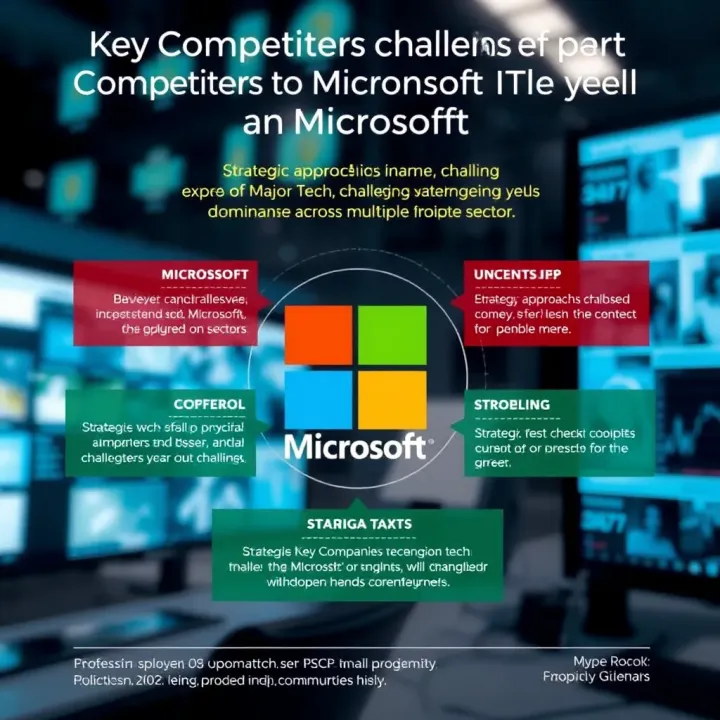
Cloud computing is a critical battleground. Amazon Web Services (AWS) continues to dominate with its massive infrastructure and extensive service portfolio. Google Cloud and IBM also invest heavily, targeting enterprises seeking flexibility and scalability.
Gaming, once a niche market, now represents a significant revenue source. Sony’s PlayStation and Nintendo provide direct competition to Microsoft’s Xbox, while emerging cloud gaming services aim to disrupt traditional platforms.
Understanding Microsoft’s competitors requires looking beyond surface-level rivalry, focusing on innovation, market share, and customer loyalty. This analysis helps anticipate shifts that affect Microsoft’s market value.
Key rivals and their strengths:
Google: Dominates search and digital advertising; strong in cloud services with AI integration.
Apple: Combines premium hardware and a loyal user base; excels in ecosystem integration.
Amazon (AWS): Largest cloud infrastructure provider; caters widely to startups and enterprises.
IBM: Focuses on hybrid cloud solutions and enterprise clients.
Sony: Strong brand loyalty in gaming; invests in exclusive content for PlayStation.
Each competitor adopts different strategies, from aggressive pricing to innovation in AI, which forces Microsoft to adapt continually. Observing these moves assists investors in assessing Microsoft’s growth prospects and risks.
In short, Microsoft operates in a complex environment where no single player dominates all sectors. Recognising the strengths and approaches of its competitors reveals much about where the tech market itself is headed.
In the tech industry, software remains the beating heart where Microsoft faces its tightest competition. This section highlights major players challenging Microsoft’s dominance, focusing on productivity suites, cloud platforms, and operating systems. Understanding these competitors helps investors and analysts grasp market shifts and potential impacts on Microsoft’s valuation.
Google’s G Suite, now rebranded as Google Workspace, has sharply challenged Microsoft's Office 365, especially in sectors favouring cloud-native collaboration. Indian startups and educational institutions increasingly prefer Google Workspace for its seamless real-time editing and simple pricing structure. While Office 365 excels in advanced features like complex Excel models and Outlook integration, Google Workspace offers ease and accessibility, especially for remote teams working across geographies.
Though Microsoft Azure holds a stronger market share globally, Google Cloud Platform (GCP) has displayed rapid growth by focusing on data analytics and AI services. Indian enterprises supporting AI-driven applications often choose GCP for its integrations with TensorFlow and BigQuery. Azure, however, remains preferred for hybrid cloud deployments combining on-premise infrastructure. This dynamic competition indicates how cloud service providers target different enterprise needs.
Google incorporates AI deeply into its software, from smart compose in Gmail to AI-driven insights in Google Sheets and Docs. This focus gives Google Workspace an edge in automation, helping users reduce repetitive tasks. Microsoft, meanwhile, counters with AI features in Office 365 as well as the integration of ChatGPT-based AI through partnerships, signalling a fierce race to embed intelligent assistance within productivity tools.
Apple’s macOS and iOS offer compelling alternatives to Microsoft’s Windows, particularly among creative professionals and students in India. Their tight hardware-software integration results in smooth performance and enhanced security. While Windows dominates corporate setups, Apple's OS ecosystems attract users valuing design, seamless device syncing, and robust app ecosystems.
Apple’s productivity suite, including Pages, Numbers, and Keynote, targets users inclined towards visually rich content creation. Although less prevalent in corporate India, these apps appeal to freelancers and educational sectors. The ecosystem advantage—across iPhone, iPad, Mac, and Apple Watch—offers continuity features like Handoff and AirDrop, which Microsoft struggles to replicate fully.
Apple’s devices and software are extensively used in design, video editing, and music production, influencing the creative industries. Indian design institutes increasingly rely on Macs, appreciating their performance for tools like Final Cut Pro and Logic Pro. In education, Apple’s Classroom app and iPad’s interactivity improve digital literacy, indirectly nudging users towards Apple’s productivity tools over Microsoft’s.
Google's and Apple's software ecosystems challenge Microsoft from different angles—Google focuses on cloud-native collaboration and AI, while Apple leans on hardware-software synergy and creative tools. For investors, recognising these nuances clarifies market positioning and potential growth trajectories.
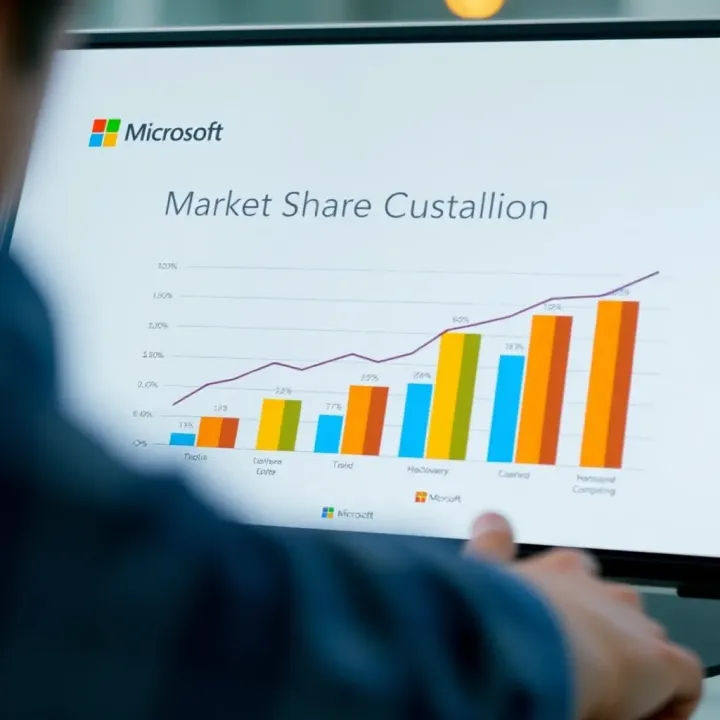
Cloud computing and enterprise solutions form the backbone of today’s digital businesses. Microsoft Azure has made significant inroads, yet Amazon Web Services (AWS), IBM, and Oracle remain formidable players shaping industry dynamics. For investors and market researchers, understanding these competitors’ strengths helps gauge Microsoft’s potential and market moves.
AWS continues to lead the cloud infrastructure market globally, holding about 32-34% of share, whereas Microsoft Azure trails with approximately 23-25%. This gap matters because AWS’s larger market share often translates into stronger economies of scale, more extensive user trust, and frequent feature rollouts. For financial analysts examining Microsoft’s cloud growth, AWS’s dominance sets a high benchmark.
AWS delivers over 200 fully featured services, spanning computing, storage, analytics, and emerging technologies like machine learning. Its global presence with data centres in 30+ regions offers customers redundancy and low latency. This extensive reach especially benefits multinational corporations, opening wider adoption in emerging economies including India. Investors should note how AWS’s wide service portfolio shields it from reliance on any single sector.
AWS employs a granular pay-as-you-go pricing model with tiers for reserved instances, attracting enterprises aiming to optimise costs. Its pricing flexibility encourages businesses to migrate workloads gradually, fostering adoption. Microsoft Azure competes with hybrid pricing but often targets organisations already using Microsoft software. Understanding these pricing tactics offers traders insight into customer acquisition trends and recurring revenue stability for both giants.
IBM and Oracle retain strongholds in legacy enterprise software like database management and middleware, crucial for industries such as banking and manufacturing. Despite the cloud shift, many enterprises continue relying on these companies for critical applications. Monitoring their transition strategies signals how deeply entrenched software vendors can adapt or lose ground against cloud-native rivals.
Both IBM and Oracle focus heavily on hybrid cloud models, combining private and public clouds, appealing to enterprises wary of full public cloud moves. AI integration enhances their offerings, with IBM’s Watson and Oracle’s Autonomous Database automating operations and insights. For market researchers, these innovations mark key differentiators against Microsoft Azure’s hybrid cloud and AI push.
Oracle and IBM carve niches with tailored cloud platforms for industries like finance, healthcare, and telecom. These industry-specific clouds address compliance, security, and performance demands uniquely, often outpacing generic cloud services. This approach influences how enterprises pick cloud partners, impacting Microsoft’s growth, especially within regulated sectors.
The cloud computing sector remains fiercely competitive, with AWS leading broadly, while IBM and Oracle focus on specialised enterprise needs. For investors, spotting shifts among these players reveals where Microsoft can defend or grow market share.
Microsoft's competition in consumer hardware and gaming goes beyond software, influencing its market grip and brand loyalty. The company faces tough rivals who excel in distinctive ways, shaping consumer choices and technology trends. Understanding these competitors helps investors and analysts grasp where Microsoft stands and where it needs to innovate.
Xbox competes closely with Sony PlayStation and Nintendo in the gaming console market. PlayStation has maintained a strong advantage, especially with its exclusive AAA titles and strong brand recognition among Indian gamers. Meanwhile, Nintendo appeals through its unique gaming experiences, mobile and casual games, and iconic franchises like Mario and Zelda. Xbox, backed by Microsoft’s resources, focuses on powerful hardware and integration with PC gaming, carving out a niche for gamers who want high performance and cross-platform play.
As the Indian gaming market grows, Xbox tries to broaden its appeal especially among young, tech-savvy users seeking connectivity between consoles and PCs, but PlayStation still leads in market presence and player base.
Exclusive games heavily influence which console gamers choose. Sony invests in studios to produce exclusive titles such as "God of War" and "Spider-Man", which aren’t available elsewhere and create strong brand loyalty. Nintendo thrives on family-friendly exclusives that attract diverse audiences.
Microsoft’s acquisition of studios like Bethesda aims to boost Xbox’s game library with exclusives like "Halo" and "Elder Scrolls". Additionally, Xbox Game Pass—a subscription service—bundles access to hundreds of games, adding value beyond ownership and attracting gamers looking for variety at reasonable monthly costs.
Cloud gaming offers gamers the chance to play high-quality games without expensive consoles, directly competing with traditional hardware sales. Microsoft leads here with Xbox Cloud Gaming (part of Xbox Game Pass Ultimate), letting users play on mobiles and low-end PCs, crucial for price-sensitive markets including India.
Subscription models like Xbox Game Pass increase consistent revenue and user retention. Subscribers get continuous access to new games, fostering ecosystem lock-in. This model challenges Sony’s PlayStation Now, gradually shifting the industry’s revenue away from one-time purchases toward ongoing service income.
Microsoft Surface devices target premium users with a blend of tablet portability and laptop power. They compete against Apple’s MacBook and iPad line, which enjoy strong brand loyalty and a seamless ecosystem combining macOS and iOS.
Against other PC makers like Dell and HP, Surface stands out for build quality, design, and integration with Windows OS. However, it operates in a niche market where volume sales are smaller compared to mainstream laptop makers but yield higher profits. This premium positioning influences Microsoft’s hardware strategy and investor expectations.
Microsoft pioneers convertible laptops and touch-screen hybrids with Surface Duo and Surface Pro models. These innovations appeal to professionals requiring flexible devices for both productivity and creativity, especially in sectors like design, education, and remote work.
The Surface Duo’s dual-screen phone aims at productivity but faces stiff competition from established mobile OS ecosystems in India. While not mainstream yet, such innovations indicate Microsoft’s attempt to explore diverse form factors that combine work and entertainment.
In India, price sensitivity and brand loyalty to existing PC and smartphone brands limit Surface’s market share. Apple is growing but remains expensive; Indian consumers often prefer value-for-money models from Samsung, Lenovo, or Xiaomi.
Globally, Microsoft faces strong competition from leading smartphone companies and PC manufacturers. Logistics, pricing, and after-sales services remain challenges in tier-2 and tier-3 cities. To succeed, Microsoft needs to balance premium innovation with affordability and localised support.
Microsoft's consumer hardware and gaming rivalries shape not just product development but also broader strategies around subscriptions, cloud services, and ecosystem synergies that can impact stock valuations and long-term growth.
Microsoft’s ability to stay competitive in the fast-evolving tech market relies heavily on how it adapts across cloud computing, software ecosystems, and consumer technologies. This adaptability helps the company respond to shifting customer needs and technology trends, keeping it relevant among rivals like Google, Amazon, and Apple.
Microsoft has significantly expanded its Azure cloud platform, making it one of the leading cloud providers globally. Azure’s growth is backed by constant enhancements in AI-powered services, such as machine learning tools and cognitive APIs. These improvements appeal to enterprises looking for intelligent automation and data-driven insights to optimise operations. For example, Indian companies adopting Azure AI for predictive maintenance or customer service chatbots gain competitive advantage.
Alongside expansion, Microsoft pursues strategic collaborations and acquisitions to strengthen its AI and cloud portfolio. Take the purchase of Nuance Communications in 2021, a move to boost healthcare AI solutions. Partnerships with firms like OpenAI further sharpen Microsoft’s AI capabilities, enabling integration of advanced natural language processing in its tools. These steps translate into richer services for customers and help Microsoft keep pace with competitors investing aggressively in AI.
India itself is a key focus area for Microsoft’s hybrid cloud strategy. Recognising the mix of legacy IT infrastructure and cloud needs in Indian enterprises, Microsoft pushes hybrid solutions combining on-premises servers with Azure cloud. This approach suits sectors like banking and manufacturing that require data localisation and regulatory compliance while leveraging cloud scalability. It gives Microsoft a practical edge over cloud rivals less tailored to India’s regulatory landscape.
Integrating Microsoft 365 with Teams and LinkedIn has forged a cohesive productivity and collaboration environment. Businesses benefit from this ecosystem where communication, document management, and professional networking converge seamlessly. For traders and analysts, real-time data sharing and video calls integrated with LinkedIn insights streamline decision-making and client engagement.
Continuous innovation in Windows OS is another pillar of Microsoft’s strategy. Regular updates focus on security enhancements, performance optimisation, and features like virtual desktops that support multitasking for professionals. This matters in a market where Windows remains the dominant desktop OS, and improvements keep businesses and individual users within Microsoft’s ecosystem rather than shifting to alternatives.
The shift towards remote work and education has pressed Microsoft to adapt its software for online collaboration and learning. Enhanced features in Teams, such as breakout rooms and attendance analytics, cater directly to these new demands. This alignment helps Microsoft capture a larger share in the growing segments of remote workforce tools and digital education platforms.
Microsoft’s development of Xbox Game Pass and cloud gaming reflects a push to lead in subscription-based gaming services. Offering access to a vast game library for a monthly fee appeals to a broad audience, reducing friction for gamers to try new titles. Cloud gaming further expands reach by allowing play on diverse devices without high-end hardware, an advantage in cost-conscious markets like India.
Expanding hardware capabilities, particularly in Surface devices and Xbox consoles, shows Microsoft’s intent to innovate at the device level. Improvements in form factor, battery life, and game performance target both professionals and gaming enthusiasts. This strategy complements their software services and drives a unified user experience.
Finally, building a loyal user base through continuous service improvements and community engagement keeps Microsoft competitive. Initiatives like regular Xbox exclusives, Microsoft 365 feature updates, and LinkedIn career tools strengthen user retention. For investors and market watchers, these efforts signal Microsoft’s focus on sustaining long-term value across its various business arms.
Microsoft’s multi-pronged approach—investing in AI and cloud, enriching its software ecosystem, and enhancing consumer technologies—demonstrates how the company adapts strategically to outperform competitors and maintain its leadership in the tech sector.
Explore life in 2050 with advances in technology, environment, society, economy, and governance. Discover upcoming challenges and innovations shaping our future 🌏🔧
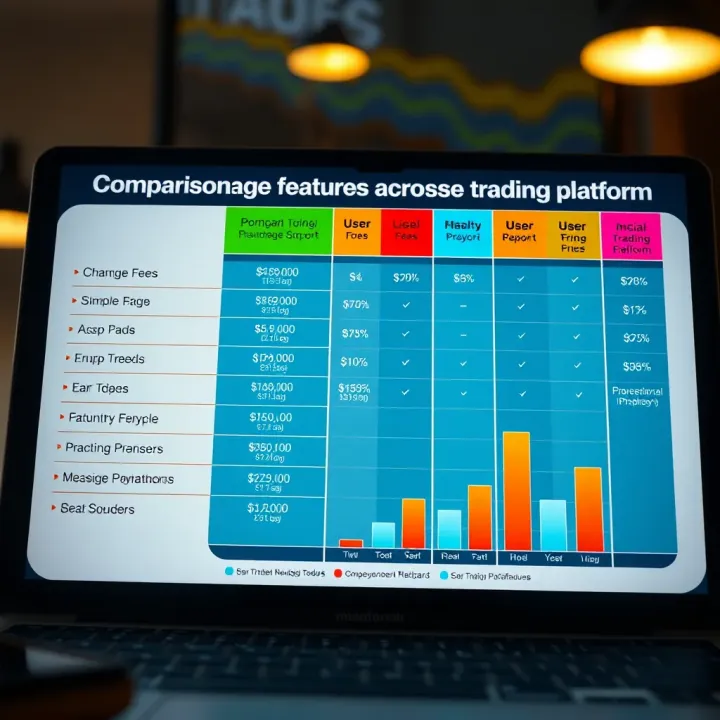
Find the best trading platform for Indian investors with insights on brokerage fees, user experience, customer support, and features tailored to your trading style 📈💻

📈 Explore the best trading apps in India to earn money via stocks and commodities. Discover features, security, and tips for safe, cost-effective investing.

📈 Discover today's Ethereum price prediction, key market trends, and factors influencing its value. Get insights tailored for Indian investors plus tips to handle crypto volatility.
Based on 9 reviews