
Understanding Derive.com: Features and Uses
Explore Derive.com’s advanced maths software 🧮, its unique features, practical use in education and industry, and get clear on licences & comparisons.
Edited By
Charlotte Evans
The term immediate maximum refers to the highest value observed at a particular moment or within a narrowly defined time frame. Unlike a general or overall maximum, which could span a long period or broad dataset, the immediate maximum focuses on the peak that occurs right now or in the very short term. This concept is especially significant for professionals in finance, engineering, and data analysis, where quick decisions often depend on pinpointing this exact peak.
In the financial markets, the immediate maximum could represent the highest stock price reached during the trading session before any significant pullback. Traders rely on spotting this to time their buy or sell orders effectively. For instance, if a stock hits an intraday high and then starts falling, knowing that immediate maximum can help investors decide whether to book profits or wait for new highs.
Engineers might look at the immediate maximum value of pressure or temperature during a system's operation to ensure safety margins are not breached. Similarly, in data analysis, identifying immediate maximums in real-time sensor data can signal anomalies or performance peaks that require quick response.
Spotting the immediate maximum helps in decision-making by providing a focused snapshot of peak values, enabling timely and precise actions.
Some key characteristics of immediate maximum include:
Time-sensitive: It is relative to the exact moment or short interval rather than a long-term overview.
Transient: Immediate maxima can fluctuate rapidly, necessitating constant monitoring.
Action-oriented: Recognised to make quick decisions, whether in trading or operational controls.
Understanding and applying immediate maximum values allows market analysts and traders to optimise entry and exit points, minimise risk, and enhance returns. In engineering and real-time monitoring, it improves safety and efficiency. Keeping an eye on these peaks enables a sharper focus on relevant data, rather than getting lost in overall trends that might not be as actionable.
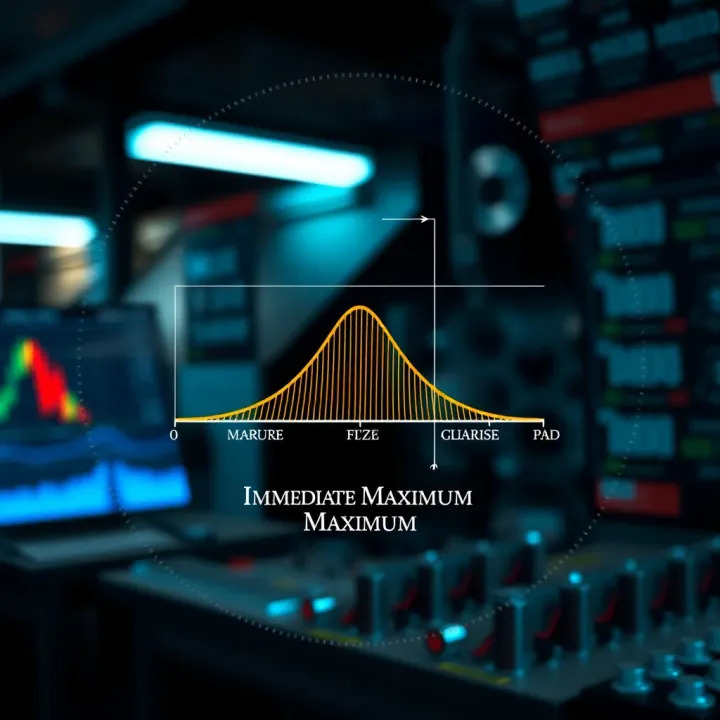
Understanding the concept of immediate maximum is essential, especially for professionals like traders and financial analysts who track real-time data changes. It refers to the highest value reached within a very short or immediate timeframe, rather than over an entire data set or longer period. For instance, in intraday stock trading, the immediate maximum might indicate the peak price a share touches before it pulls back during that trading session. Recognising this helps in making prompt decisions, such as when to buy or sell.
Immediate maximum is essentially the highest value observed at a particular moment or over a very brief interval within a continuous data series. It contrasts with the overall maximum, which is the highest peak over a longer, defined period. This concept is practical since markets and systems often fluctuate quickly, requiring fast identification of peaks for timely actions.
While the overall maximum represents the absolute highest value in the data set — say, the highest stock price reached over a month — the immediate maximum pinpoints a local peak that occurs momentarily. That local peak might not stay highest for long but signals temporary strength or pressure. Traders value this for intraday strategies where acting on latest peaks can optimise exit or entry points.
Immediate maximum doesn’t always equate to significant market movements; it could be a fleeting spike or noise. Context, such as volume or supporting indicators, helps determine if that peak is meaningful. For example, in a low-volume period, an immediate maximum might not carry weight, whereas during high activity, it could signal a genuine trend shift.
Mathematically, an immediate maximum is identified where a data point is higher than its immediate neighbours in a time series. For instance, if price series at time t is higher than at t-1 and t+1, t qualifies as an immediate maximum. This simple local comparison helps algorithms detect peaks rapidly without waiting for entire data sets.
Immediate maxima play a key role in revealing short-term trends and volatility. Identifying these peaks enables analysts to understand rapid market movements and assess momentum shifts. For example, repeated immediate maxima at rising levels might indicate a bullish run in stock prices.
Immediate maximum is a subtype of local maxima, which are points higher than their neighbours but may span a larger neighbourhood. Immediate maximum focuses strictly on adjacent data points, often over the smallest possible window. This distinction is important in high-frequency trading or real-time signal processing where split-second decisions rely on immediate rather than broader local maxima.
Recognising immediate maximum points swiftly aids in optimising trading strategies and managing risk effectively by capturing momentary peaks before market reversals occur.
plaintext Example: Consider a share price series: 105, 110, 108, 112, 109.
Immediate maxima here are 110 (since 110 > 105 and 108) and 112 (112 > 108 and 109).
Overall maximum is 112 for this series.
## Recognising Immediate Maximum in Practical Contexts

Recognising the immediate maximum is key in several fields because it helps spot the highest value right at the moment it occurs, rather than a later or overall peak. This focus allows for faster, more informed decisions in dynamic environments where conditions keep changing. It is especially handy in finance, engineering, and data analysis, where swift action based on immediate peaks can improve outcomes significantly.

### Use in Financial Markets and [Trading](/articles/understanding-derivative-trading-basics/)

**Spotting immediate maximum in stock prices** helps traders identify the highest price within a short trading window, like minutes or hours, rather than the day’s overall peak. This is vital for intraday traders who aim to buy low and sell high within the same session. For example, if a stock suddenly spikes to its immediate maximum, nimble traders can catch the price movement before it drops back.

**Application in intraday trading strategies** depends heavily on detecting these immediate maximum points. Traders use real-time charts and software to track price spikes and volume surges, making split-second decisions on entering or exiting positions. Immediate maximum points serve as crucial indicators for setting stop-loss orders or triggering profit booking, which safeguards gains in a fast-moving market.

**Risk and opportunity assessment** revolves around [understanding](/articles/understanding-derive-com-features-uses/) that these immediate peaks show when a stock reaches a potentially overbought level temporarily. While this signals a chance to sell and lock in profits, it also warns of a possible quick reversal. Financial analysts use this information to weigh risk before recommending trades, helping investors avoid sudden losses caused by false peaks.

### Application in Engineering and Manufacturing

**Identifying peak loads and stresses** allows engineers to catch the highest stress points machines experience during operation. For instance, a manufacturing line motor may face short bursts of heavy load, which, if identified as immediate maxima, indicate possible points of fatigue or failure. Recognising these loads early helps prevent unexpected breakdowns.

**Importance in machine performance monitoring** lies in tracking these immediate peak values to ensure that equipment operates within safe limits. Sensors measuring vibration or temperature capture instantaneous maximum readings to alert operators about abnormal conditions like overheating or excess vibration, allowing timely interventions.

**Preventive maintenance planning** relies on data about immediate maxima to schedule upkeep before serious issues arise. Rather than waiting for machines to fail, maintenance teams analyse peak stress trends to plan repairs or part replacements efficiently. This approach avoids costly downtime and extends machinery life.

### Role in Data Analysis and Signal Processing

**Detecting immediate maximum in sensor readings** is crucial in fields like environmental monitoring or industrial automation. Sensors might capture sudden spikes in temperature, pressure, or pollution levels. Pinpointing these immediate maxima supports prompt responses—say, shutting off a machine if temperature spikes dangerously.

**Filtering and smoothing techniques** help to remove noise so that genuine immediate maxima stand out. Raw sensor data often includes fluctuations, which can mislead analysis. Applying methods like moving averages or low-pass filters clears false peaks, presenting clearer signals for decision-making.

**Enhancing accuracy in trend detection** depends on isolating true immediate maximums from irrelevant fluctuations. This improves forecasting and model reliability in various applications, including stock market predictions or quality control in manufacturing. Accurate detection [guides](/articles/understanding-qx-trading-guide/) better strategic choices based on real-time information.

> Recognising immediate maximums offers a practical edge by signalling the right moment to act—whether it's selling stocks, halting machinery, or responding to sensor alerts. Reacting to these peak points promptly often means the difference between profit and loss, safety and failure.

- In trading, it means seizing profits early or limiting damage from sudden reversals
- In engineering, it means preventing breakdowns through timely maintenance
- In data analysis, it means filtering out noise for dependable insights

Clearly, understanding immediate maximum in these practical contexts adds value across sectors, driving sharper, faster decisions that matter.

## Importance of Immediate Maximum in Decision-Making

### Impact on Timely Interventions and Responses

In financial [markets](/articles/understanding-range-markets-india/), recognising the immediate maximum helps traders and investors respond quickly to price spikes or sudden demand surges. For instance, an intraday peak in stock price signals a potential profit-taking opportunity or the best point to exit a position. Missing such quick peaks might lead to lesser gains or unexpected losses, especially in fast-moving markets like NSE or BSE where prices fluctuate every second.

Similarly, in engineering, spotting stress points early — moments when machinery hits its immediate maximum load — lets maintenance teams act promptly. Take a textile factory in Ahmedabad: if a loom shows a sudden peak in vibration or temperature, technicians can intervene before breakdowns occur, avoiding costly downtime and repairs.

Avoiding cascading failures demands quick detection of immediate maxima before problems ripple through systems. In power grids or manufacturing plants, a peak load on one part may overload connected components. Immediate action stops a small fault from becoming a widespread outage, preserving operational stability and safety.

### Enhancing Efficiency and Optimisation

Resource allocation based on peak values improves efficiency by directing efforts where and when they are most needed. In call centres, analysing immediate maximum wait times helps managers deploy extra staff during sudden call surges. This cuts customer frustration and resource wastage, ensuring smoother operations.

Improving process throughput depends on understanding immediate maxima to prevent bottlenecks. For example, in a FMCG plant, if a conveyor belt reaches its max capacity during packing, adjusting speed or adding shifts can maintain output rates without sacrificing quality.

Balancing workloads effectively means spreading peak demands evenly to avoid burnout or inefficiencies. In IT firms, monitoring CPU or network usage spikes helps schedule backups and heavy processing during off-peak times, preventing slowdowns. By managing these immediate maximum points, businesses optimise performance and maintain steady progress.

> Timely recognition of immediate maximum values across sectors directly supports swift decision-making, minimises risks, and boosts overall productivity, making it a vital concept for traders, engineers, and analysts alike.

## Challenges in Identifying and Using Immediate Maximum

Recognising the immediate maximum in data sets or real-time streams isn't always straightforward. Various factors can cloud the clear identification of these peaks, affecting decisions in sectors like trading or industrial monitoring. Understanding these challenges helps traders and analysts avoid misreading signals and making costly misjudgements.

### Data Noise and False Peaks

Noise in data refers to random fluctuations or errors that distort the true signal. These fluctuations often create false peaks, which can look like immediate maxima but do not represent meaningful trends or important points. For instance, in stock price charts, minor price jitters due to trading volume spikes or rumours can produce misleading peaks. Without careful handling, such noise might trigger premature buy or sell actions.

Distinguishing between genuine peaks and outliers is vital. A single outlier—a spike caused by an atypical event rather than sustained movement—may look like an immediate maximum but should not influence decisions seriously. Traders usually compare current data with historical patterns or use statistical tests to confirm if a peak is significant. Ignoring this step risks reacting to mere randomness rather than real market shifts.

Filters and threshold settings are practical tools to handle noise and reduce false positives. A filter smoothens sudden random jumps, helping reveal the underlying trend by averaging out erratic variations. Thresholds set the minimum prominence a peak must have to be considered important. For example, a trader might ignore price increases below a certain percentage to avoid getting caught up in minor, insignificant movements. Such parameters must be finely tuned; overly strict filters could miss true signals, while too loose filters might capture noise.

### Timing and Response Delays

Delayed identification of an immediate maximum can severely impact outcomes. In fast-moving financial markets, even seconds matter; missing the right moment to act on immediate peak prices might lead to lost profits or increased losses. For example, in intraday trading, a delay in spotting a price peak often means a missed opportunity to sell at the highest point.

Real-time monitoring solutions help combat this challenge by continuously analysing data as it arrives. Advanced trading platforms and charting tools offer live updates and instant alerts on peak formations, enabling traders to stay ahead. The use of streaming data feeds and high-frequency updates ensures decision-makers don’t work with stale information.

Automation in alert systems adds another layer of efficiency. Automated triggers can notify or execute trades when immediate maximum conditions are detected, removing human delays. For instance, algorithmic trading systems examine market prices and execute buy or sell orders upon encountering predefined peak thresholds. This reduces the window for error and improves reaction speed, critical for capitalising on short-lived market movements.

> Traders and financial analysts who manage noise effectively and act on immediate maxima promptly can gain a decisive edge in volatile markets.

## Key points:

- Noise creates false peaks, requiring filters and thresholds.
- Outliers differ from genuine maxima and need to be identified correctly.
- Delays in detection harm timely actions, especially in intraday contexts.
- Real-time monitoring and automated alerts enhance response speed.

Addressing these challenges is essential for any professional relying on immediate maximum identification to make accurate, timely decisions in dynamic environments.

## Tools and Techniques to Monitor Immediate Maximum

Monitoring immediate maximum points accurately requires the right mix of tools and techniques. These tools help traders, analysts, and engineers spot peak values in real time, aiding crucial decisions like buying or selling stocks or identifying stress in machinery before failure.

### Software Solutions and Analytical Tools

**Data visualisation software** plays a key role by turning raw numerical data into graphs and charts. For traders using platforms like Zerodha Kite or Upstox, these visualisations provide clear insights into intraday peak prices or sudden changes. Visual tools help quickly distinguish between ordinary fluctuations and a true immediate maximum.

**Algorithmic peak detection** automates identifying peak points in large datasets. These algorithms scan real-time data streams, flagging price highs or sensor spikes faster than manual observation. For instance, machine learning models can be applied to detect unusual stock price peaks or abnormal stress levels in machinery, enabling swift reactions to potential opportunities or risks.

Integrating these software tools with existing trading or monitoring platforms is critical. Seamless integration means peak alerts can be received directly via trading terminals or industrial control systems without switching interfaces. For [Indian](/articles/understanding-roboforex-login-india/) stock brokers using NSE or BSE platforms, integration ensures timely alerts that match their workflow, improving efficiency.

### Hardware and Sensor Technologies

Sensors capable of capturing peak data points are vital, especially in engineering and manufacturing. In factories, vibration or load sensors placed on equipment record instant maximum stress values, helping maintenance teams focus attention where it's most needed. These sensors deliver real-time data essential for spotting trends before damage occurs.

Signal conditioning improves the accuracy of sensor data by filtering out noise and enhancing signal clarity. For example, when monitoring machine performance in a Mumbai manufacturing plant, signal conditioning circuits make sure transient spikes caused by interference are not mistaken for genuine immediate maxima.

Several Indian manufacturers have adopted these technologies to improve reliability. Companies like Bharat Forge use sensor-based monitoring to detect stress points during forging processes, enabling better scheduling of repairs and avoiding unexpected downtime. This shows how hardware and software combined can provide actionable insights tailored to local industry requirements.

> Effective monitoring of immediate maximum needs both smart software and reliable hardware. Together, they cut through data noise and provide the real-time precision traders and engineers depend on for informed decisions.

## Case Studies Demonstrating Immediate Maximum in Action

Understanding how immediate maximum values work in real scenarios helps clarify their practical impact. Case studies reveal how this concept plays out in fields like finance and industry, which can aid traders and engineers making fast decisions on peak moments. These examples also highlight challenges faced and solutions applied in real-time monitoring.

### Financial Market Scenario: Intraday Stock Price Peaks

#### How traders use immediate maximum

Traders actively track immediate maximums during intraday trading to spot short-term peaks in stock prices. For instance, if a stock hits a new high within the day’s session, it signals a potential opportunity to sell and lock in gains before a pullback. Many intraday strategies depend on recognising these peaks promptly to execute buy or sell orders efficiently.

Algorithmic trading platforms also incorporate immediate maximum detection in their rules, automatically triggering trades when stock prices hit particular high points. For traders relying on quick responses rather than long-term trends, identifying immediate maximum points can be a game-changer.

#### Effect on buying and selling decisions

Spotting an immediate maximum affects buying and selling choices directly. When a stock’s intraday price peaks, selling immediately can help avoid subsequent drops. Conversely, understanding where the immediate maximum lies informs buyers when not to enter, preventing costly mistakes during temporary price spikes.

Besides individual traders, mutual funds or portfolio managers sometimes use such peak detection to rebalance holdings, safeguarding their investments from volatile swings. Immediate maximums act as signals to adjust positions swiftly for optimal returns.

> Recognising intraday immediate maximums helps traders balance risk and reward by deciding the best moments to enter or exit the market.

### Industrial Equipment Monitoring in India

#### Detecting stress points to prevent breakdowns

In Indian industries, immediate maximum detection helps identify stress points in machinery before they escalate into major breakdowns. For example, sensors on a textile loom may detect a sudden maximum vibration level, signalling abnormal stress. Early detection lets technicians intervene before machines fail, saving production time and repair costs.

Such real-time monitoring is crucial in sectors like manufacturing and power plants where equipment runs continuously. Immediate maximum values help pinpoint exactly when stress peaks, making preventive action precise and timely rather than reactive.

#### Optimising maintenance schedules

Immediate maximums allow optimised maintenance planning by indicating actual peak usage or stress periods instead of relying on fixed schedules. This approach is cost-effective, especially for large-scale Indian factories managing numerous machines.

Instead of pre-scheduled downtime, data showing immediate maximum stress points can guide when to prep for maintenance works. It minimises idle time and ensures machines receive attention only when necessary, boosting overall efficiency and productivity.

> Using immediate maximum data for maintenance planning results in smarter resource use and longer equipment life in Indian industrial settings.

In essence, these case studies show immediate maximum’s vital role in both financial and industrial contexts, reflecting its value for timely decision-making and operational excellence.

## Summary and Best Practices for Managing Immediate Maximum

Understanding and effectively managing immediate maximum is vital across fields like trading, engineering, and data analysis. This involves recognising peak points as they occur, interpreting data accurately, and adjusting strategies swiftly. Summarising insights and following best practices help avoid missed opportunities, prevent costly failures, and improve overall performance.

### Key Takeaways for Effective Use

**Stay alert to real-time data changes**
Immediate maximum values often shift quickly, especially in fast-paced environments like stock trading. Monitoring live data feeds keeps you tuned to sudden peaks or dips that may affect your decisions. For example, intraday traders rely on real-time price ticks to spot immediate maximums and adjust buy or sell orders accordingly, preventing losses or capturing gains.

Constant vigilance helps avoid outdated decisions based on stale data. Tools such as trading terminals and dashboard alerts enable this continuous watch, ensuring you're never caught off guard by rapid market swings.

**Use proper tools and filters**
Not every peak in data is meaningful; some arise from noise or random fluctuations. Accurate detection depends on software capable of filtering out irrelevant spikes and flagging genuine immediate maximum points. Algorithms that implement smoothing techniques or set threshold levels improve peak identification.

For instance, financial analysts often use Moving Average Convergence Divergence (MACD) or Relative Strength Index (RSI) indicators to differentiate true price maxima from momentary blips. Without effective filters, decision-making risks being based on false signals, leading to poor outcomes.

**Act promptly to optimise outcomes**
Once an immediate maximum is detected, timing matters. Delays in reacting to these peaks—whether it's executing a trade, adjusting production load, or calling maintenance—can mean lost opportunities or increased costs.

For example, if a trader waits too long after a price peak to sell, the advantage might evaporate. Similarly, in manufacturing, recognising maximum stress points early allows maintenance teams to act before breakdowns occur. Prompt intervention is essential to capitalise on immediate maxima effectively.

### Recommendations for Future Monitoring Approaches

**Investment in smart monitoring systems**
Advancing technology offers more precise and automated solutions to spot immediate maxima. Investing in smart systems—like AI-driven analytics platforms or IoT-enabled sensor networks—can enhance detection accuracy and speed.

In Indian industries, adopting such modern tools allows real-time analysis of data streams, reducing human error and enabling faster responses. For traders, algorithmic platforms customise alerts on price behaviour, improving trade execution.

**Training and skill development**
Technology alone isn’t enough. Users must understand how to interpret immediate maxima correctly and act efficiently. Regular training programmes help build expertise in recognising patterns, applying filters, and making timely decisions.

Financial analysts and traders in India often attend workshops or certification courses that teach advanced charting and data analysis techniques. Similarly, engineers can benefit from training on sensor data interpretation and preventive maintenance planning.

**Customising solutions to specific industry needs**
Different sectors and businesses require tailored approaches for managing immediate maximum values. One-size-fits-all tools may miss nuances important to particular workflows or data types.

For example, a commodities trader needs tools focused on price volatilities, whereas a manufacturing unit requires systems that monitor mechanical stress patterns. Customising solutions improves relevance, leading to better detection of immediate maxima and more effective action plans.

> Managing immediate maximum values well can transform decision-making and operational efficiency, especially when combined with the right tools, timely actions, and domain-specific know-how.

This summary highlights the critical steps to harness immediate maximum effectively as presented in previous sections, blending practical examples relevant to Indian contexts and global best practices.Explore Derive.com’s advanced maths software 🧮, its unique features, practical use in education and industry, and get clear on licences & comparisons.

Explore free demos 🎁 to understand their benefits for businesses and consumers in India. Learn how to use, design, and overcome challenges effectively. ✔️

🔍 Understand deposits and withdrawals in Indian banks, from types and procedures to security and regulations. Learn tips to manage your transactions confidently and safely.
📈 Learn all about derivative trading in India: key concepts, types, strategies, risks, and regulations to trade confidently in stocks, commodities, and indices markets.
Based on 11 reviews