

Arb Price Prediction: Trends and Outlook
📈 Explore Arb (Arbitrum) price trends, expert views, technical signals, and market factors shaping its future. Stay informed on risks and investment outlook for 2024.
Edited By
Mia Robinson
India's economy is poised for notable shifts by 2025, driven by evolving government policies, demographic changes, and advancements in technology. Traders, investors, and market researchers need to understand these dynamics clearly to capitalise on emerging opportunities and navigate risks.
The government’s push towards infrastructure development, including initiatives like the National Infrastructure Pipeline (NIP), aims to propel economic growth. Coupled with reforms in sectors such as manufacturing and agriculture, these efforts should boost employment and enhance productivity.
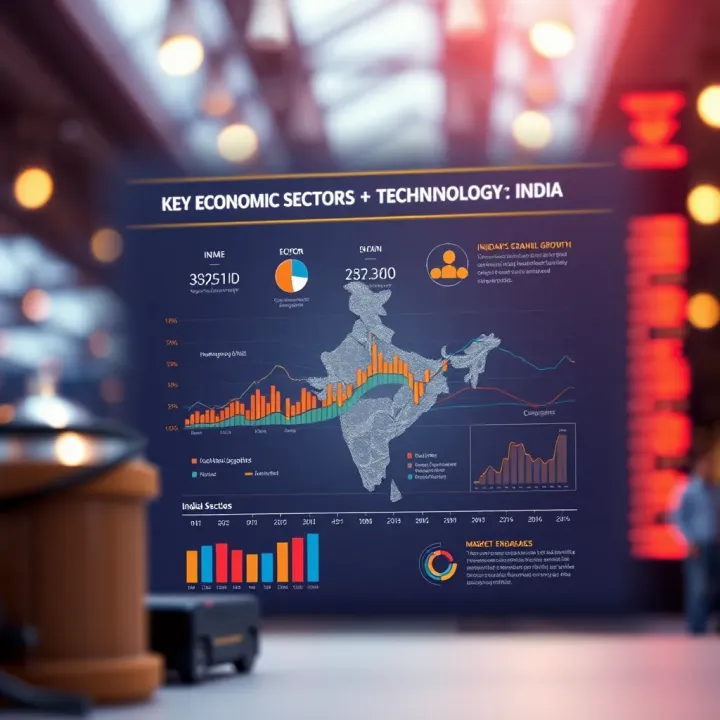
Demographically, India’s working-age population continues to expand, offering a potential dividend through increased labour supply and consumer demand. However, realising this depends heavily on effective skill development and job creation. For instance, sectors like information technology and pharmaceuticals are expected to absorb a significant chunk of skilled workers.
Technology adoption remains a significant growth driver. The proliferation of digital payment platforms such as UPI (Unified Payments Interface) and fintech innovations has widened financial inclusion, supporting small businesses and rural markets. Further advancements in AI, big data, and cloud computing could reshape industries ranging from logistics to retail.
External factors such as global trade tensions, commodity price fluctuations, and changing geopolitics will affect capital flows and export growth. India's strategic pivot towards strengthening ties with key partners like the US, Japan, and the ASEAN bloc will be critical in mitigating external shocks.
Investors should monitor how Indian policymakers balance growth stimulation with inflation control, particularly against the backdrop of fluctuating crude oil prices and global interest rate movements.
Key sectors like renewable energy, electric vehicles, and e-commerce show promise for robust expansion. For example, India's solar capacity has been accelerating, supported by favourable policies and falling technology costs.
Understanding these intertwined trends and challenges can help financial analysts develop informed forecasts and investment strategies. The next few years hold both headwinds and tailwinds for India's economy — a nuanced approach will prove indispensable.
Understanding the current economic landscape and growth projections is vital for traders, investors, and financial analysts to make informed decisions about India’s market direction. This section presents a snapshot of where the economy stands today, highlighting recent GDP trends and the roles played by agriculture, manufacturing, and services sectors. Proper insight into these factors helps market participants anticipate areas of opportunity and risk in the run-up to 2025.
India's Gross Domestic Product (GDP) growth in recent years has shown strong recovery from the pandemic slump, with the economy expanding at around 6-7% annually in the latest data. Forecasts suggest that GDP growth will stabilise near 6.5% in the next two years, barring major external shocks. This steady pace reflects robust domestic demand and improving export competitiveness. However, global inflation and supply chain disruptions continue to create headwinds, requiring careful monitoring.
Agriculture remains a backbone for India's rural economy, directly supporting more than 50% of the population. Despite its shrinking share in GDP—around 17-18%—agriculture’s role in employment and food security sustains its importance. Recent trends show increased adoption of mechanisation and digital tools, such as soil health cards, helping farmers optimise inputs and increase yield. For investors, agritech startups and supply chain modernisation offer promising areas beyond traditional farming.
Manufacturing contributes roughly 16-18% to India's GDP and is key for job creation. The government's Make in India initiative aims to boost this sector by encouraging local production and attracting foreign investment. Growth in automobile manufacturing and electronics shows particular strength, with cities like Pune and Bengaluru growing as industrial hubs. Additionally, easing of labour laws and infrastructure projects enhance manufacturing prospects. Traders and market analysts should watch industrial production indices and export data closely as indicators of manufacturing health.
The service sector dominates India's economy, contributing nearly 55-60% to GDP. It includes IT, finance, healthcare, and tourism, which have recovered strongly post-pandemic. Information Technology (IT) services remain a global leader, driving export revenues and employment. Financial services are expanding through digitalisation, increasing banking penetration across rural and urban India. For investors, service sector growth signals potential in tech startups and financial technology firms stepping up innovation and outreach.
India's economic strength lies in balancing growth across sectors. While services lead in contribution, agriculture and manufacturing provide critical support for inclusive development and resilience.
By grasping these building blocks of India’s economy, market stakeholders can better understand the trends influencing investment opportunities and potential risks through 2025.
Government efforts play a major role in shaping India's economic future by driving reforms that influence investment, business growth, and overall stability. Understanding how policy changes affect various sectors helps traders and investors make informed decisions about risk and opportunity ahead of 2025.
The Goods and Services Tax (GST), launched in July 2017, streamlined India's complex indirect tax system into a unified structure. This reform reduced logistical hassles and tax cascading, which benefits traders by lowering costs and improving supply chain efficiency.
For investors, GST’s transparency and simplified compliance have increased business confidence, especially in manufacturing and retail sectors. Though initial teething issues affected smaller businesses, the overall impact of GST remains positive for long-term economic integration and growth.

The Start-up India initiative fosters innovation through tax incentives, easier registration, and funding support, energising the start-up ecosystem. This has attracted venture capital interest and expanded job creation in technology, fintech, and biotechnology, sectors closely watched by market analysts.
Make in India, meanwhile, aims to boost domestic manufacturing by encouraging foreign direct investment and improving ease of doing business. Both programmes complement each other by nurturing home-grown innovation while enhancing industrial capacity, opening fresh avenues for portfolio diversification.
Infrastructure projects such as highway expansions, urban transit systems, and port modernisation underpin economic momentum. Improved connectivity reduces transportation costs and speeds up market access for businesses, aiding sectors like e-commerce and export-focused industries.
Government’s focus on public-private partnerships and increased budget allocations for infrastructure development have generated opportunities for investors in construction, materials, and logistics companies. This momentum also supports financial markets by stimulating demand for capital and credit.
Looking ahead, the government’s fiscal strategy balances investing in growth-enhancing sectors while managing the fiscal deficit. Continued emphasis on disinvestment and subsidy rationalisation intends to keep public finances sustainable.
The Reserve Bank of India’s (RBI) monetary policy remains vigilant to inflationary pressures, with measured adjustments to interest rates expected. This steady approach aims to support credit flow to businesses without igniting excessive inflation, a critical factor for market stability.
Traders and financial analysts should closely watch fiscal measures and RBI signals, as these policies directly affect liquidity, borrowing costs, and market sentiment going into 2025.
Overall, government initiatives and policy reforms form the backbone of India’s economic framework, influencing growth prospects and investor confidence alike.
Technology has become a major force behind India’s economic momentum, reshaping how businesses operate and how consumers interact with markets. By 2025, tech-driven transformations will influence capital flows, market structures, and productivity gains. For traders and investors, keeping an eye on these developments helps spot promising sectors and assess risks with better clarity.
India Stack represents a suite of public digital infrastructure designed to enable paperless, cashless, and presence-less services across the country. It forms the backbone of India's digital economy and has lowered barriers to entry for many businesses and consumers alike.
UPI has revolutionised the payments landscape in India by offering instant, interoperable money transfers through mobile applications without the need for traditional banking channels. It has not only simplified everyday transactions but also enhanced financial transparency and inclusion. For instance, traders can now settle payments immediately with suppliers, while investors benefit from faster fund transfers during high volatility in stock markets.
UPI’s scalability and ease of integration have encouraged major e-commerce platforms and startups to adopt it extensively. Payments through UPI crossed trillions of rupees monthly, signalling widespread acceptance and trust. This rapid adoption underlines UPI’s role as a financial catalyst in India’s tech-driven economy.
The Aadhaar programme, India's biometric identification system, underpins many government e-governance initiatives by providing a reliable digital identity to over 1.3 billion residents. It has made subsidy distribution, tax filing, and welfare schemes more transparent and efficient. For businesses, it reduces fraud risks and streamlines KYC (know your customer) norms.
e-Governance platforms powered by Aadhaar improve regulatory compliance and enable faster approvals, saving time and resources for companies and investors alike. For example, filing Goods and Services Tax (GST) returns or availing benefits has become more straightforward, cutting down cumbersome paperwork and delays.
Artificial intelligence (AI) is gaining traction across Indian industries, from automating back-office tasks to enhancing customer service through chatbots. In financial markets, AI-driven algorithms help detect fraudulent transactions and improve trading strategies. This technology is a key enabler for firms seeking competitive edges and operational efficiency.
E-commerce remains a driver of economic growth with rising internet penetration and mobile usage. Platforms like Flipkart and Amazon India continue to expand into tier-2 and tier-3 cities, boosting local entrepreneurship and generating employment.
Meanwhile, the start-up ecosystem is flourishing, supported by government schemes and venture capital inflows. Start-ups in fintech, healthtech, and agritech reflect India's evolving consumer preferences and growing digital adoption, providing new investment avenues.
Monitoring technological changes such as digital payments, AI applications, and start-up growth is essential for market participants aiming to capitalise on India’s economic transition.
Understanding these technology trends offers traders, investors, and analysts a clearer picture of the sectors likely to shape India’s growth story through 2025 and beyond.
Demographic factors significantly shape India's economic trajectory, particularly as the country moves towards 2025. The young workforce and accelerating urbanisation offer both opportunities and challenges that investors and financial analysts must monitor closely. At the same time, education and skill development remain key areas influencing productivity and growth sustainability.
India's workforce is notably young, with nearly 65% under the age of 35. This demographic dividend could fuel economic growth as more people enter the job market. Cities like Bengaluru, Hyderabad, and Pune are attracting talent, bolstering sectors such as IT, manufacturing, and start-ups. For example, Bengaluru's tech parks continue to expand, drawing skilled workers and investors alike.
Urbanisation is speeding up, with the urban population expected to cross 40% by 2025. This shift often leads to higher consumer demand, especially in real estate, retail, and services. However, rapid urban growth strains infrastructure — public transport and housing shortages are notable concerns in cities like Mumbai and Delhi. Investors focusing on infrastructure projects or urban real estate can expect sustained demand, though project risks linked to delays and regulatory hurdles exist.
The influx of young workers into urban hubs is not just about numbers; it drives innovation and consumption patterns that redefine market trends.
Despite a vast young workforce, skill gaps remain a barrier to fully leveraging this demographic advantage. India's education system, while producing millions of graduates annually, often lacks quality and relevance to industry needs. For instance, a significant number of engineering graduates are not directly employable in technology or manufacturing due to outdated curricula.
The government’s Skill India initiative aims to bridge this gap, targeting vocational training for youth. Still, private sector involvement and partnerships with multinational corporations are crucial for hands-on experience and updated skill sets. Financial analysts should watch sectors benefitting from enhanced skill development, such as advanced manufacturing, AI, and healthcare services.
Further, unequal access to quality education between urban and rural areas heightens inequality and limits workforce potential. Digital education platforms have started to reduce this divide, but infrastructure like broadband connectivity remains uneven. Skill enhancement focusing on digital literacy will be essential, especially as more companies pivot towards AI and automation.
The young workforce drives consumption and innovation but requires relevant skills to maintain productivity.
Urban growth fuels demand in real estate and infrastructure but brings challenges with congestion and resource management.
Bridging education and skill gaps is critical for sustaining growth and catching global economic shifts.
Understanding these demographic dynamics allows investors and market researchers to identify sectors with strong growth prospects and areas needing strategic intervention.
India’s economic prospects for 2025 cannot be viewed in isolation from global factors. External challenges like trade relations, geopolitical risks, inflation trends, and supply chain disruptions significantly affect market confidence, investment flows, and export-import dynamics. For investors and traders, keeping an eye on these external elements helps in anticipating market movements and making informed decisions.
Trade relations shape India’s access to foreign markets and supply chains. Recent tensions around trade policy reforms, especially with key partners like the US and China, create uncertainties. For instance, increased tariffs or export restrictions on semiconductors and electronics components can disrupt India’s manufacturing ambitions under 'Make in India'. Geopolitical conflicts, such as those in the Indo-Pacific region, affect shipping routes and energy supply, pushing up shipping costs.
Investors should watch how India navigates Free Trade Agreements (FTAs) and strategic partnerships to mitigate these risks. The India-ASEAN trade corridor remains a promising area, but ramping up infrastructure and IT connectivity is critical. Additionally, India's emphasis on self-reliance (Atmanirbhar Bharat) aims to reduce dependence on vulnerable supply chains, but balanced global integration remains key.
Global inflation pressures, driven by rising crude oil prices and commodity costs, directly hit India’s fiscal and monetary stability. Persistent inflation keeps the Reserve Bank of India (RBI) cautious on interest rate cuts, affecting borrowing costs and market sentiment. For example, the recent surge in edible oil and metals prices squeezed household budgets and manufacturing margins alike.
Supply chain disruptions—stemming from lockdowns in China, container shortages, and logistic bottlenecks—have delayed Indian exports and industrial production. This not only affects exporters’ revenue but also inflows of foreign exchange, impacting the rupee’s stability. Companies reliant on imported raw materials face cost-push inflation, potentially slowing down sectors like electronics and pharmaceuticals.
Staying alert to these global inflation and supply chain trends can help market participants hedge risks and identify opportunities, such as investing in sectors less exposed to import disruptions or inflation volatility.
In summary, external challenges will continue influencing India’s economy in 2025. Traders, investors, and policymakers must closely monitor trade policies, geopolitical developments, inflation dynamics, and supply chain health. Pragmatic strategies addressing these external factors will strengthen India’s position amid a changing global economic landscape.
Sustainable and inclusive growth is fast becoming a major focus for India’s economy, especially as the country aims to balance rapid development with environmental stewardship and social equity. For traders, investors, and financial analysts, understanding these opportunities is essential to identify sectors offering long-term returns while aligning with regulatory and global sustainability trends.
India’s commitment to expand its renewable energy capacity presents significant investment potential. With ambitions to reach 500 GW of renewable energy by 2030, sectors like solar, wind, and green hydrogen production are gaining traction. For example, Gujarat and Rajasthan have become front-runners in solar power generation, offering scalable projects benefiting from government incentives.
Besides energy generation, technology-driven solutions like smart grids and energy storage systems are crucial to managing intermittent supply from renewables. These innovations will reduce fossil fuel dependency and carbon footprint, fitting well with investor interest in ESG (environmental, social, governance) criteria. On top of that, stricter pollution control norms for industries will push demand for cleaner technologies and waste management services, opening new avenues for sustainable ventures.
Financial inclusion remains a strong growth driver as India expands access to banking, digital payments, and credit facilities in rural areas. The rise of platforms like Unified Payments Interface (UPI) has revolutionised digital transactions, even in remote regions. Moreover, government schemes under the Pradhan Mantri Jan Dhan Yojana (PMJDY) continue to bring unbanked populations into the formal financial system, enabling direct benefit transfers and microloans.
Rural development is linked closely to financial inclusion. Improving agricultural productivity through better access to finance, insurance, and technology helps uplift millions. For instance, agri-tech startups providing farm advisory, supply chain solutions, and market linkages are attracting investor attention. This sector’s growth is expected to reduce rural poverty and increase consumer demand, supporting overall economic expansion.
Embracing sustainable and inclusive models ensures businesses not only deliver returns but also contribute to India’s broader socio-economic goals.
In summary, investors and market researchers would do well to explore green energy platforms and rural financial services, as these sectors combine growth prospects with policy backing and societal benefits. Their progress will reflect how India manages to grow responsibly while harnessing the full potential of its demographic and natural resources.
📈 Explore Arb (Arbitrum) price trends, expert views, technical signals, and market factors shaping its future. Stay informed on risks and investment outlook for 2024.

📈 Explore RIL share price prediction for 2025—key factors, recent trends, expert views, and risks to guide your investment decisions in India's market.

📈 Explore how Reliance Industries plans to shape India’s economy with tech innovations, strategic moves, and tackle future market challenges ahead.
📊 Discover BASF's 2025 share price forecast with insights on financial health, strategic moves, industry trends, and expert views to aid your investment decisions.
Based on 11 reviews