
Gold Price Forecast in India for 2040
📈 Explore India's gold price outlook for 2040, analysing economic shifts, global events, investment trends, and policy impacts shaping future valuation.
Edited By
Emily Thompson
Gold has always been more than just a precious metal; it acts as a financial barometer reflecting global economic moods. Traders and investors watch gold prices closely because they react swiftly to various influences, especially when predicting the expected gold rate tomorrow.
Understanding these price changes comes down to factors like international demand, currency movements, and stock market trends. The world market for gold operates 24/7, causing fluctuations even within a day. For example, a stronger US dollar often pressures gold prices downward because gold becomes costlier for holders of other currencies, while a weaker rupee in India can push local gold rates higher, given increased import costs.
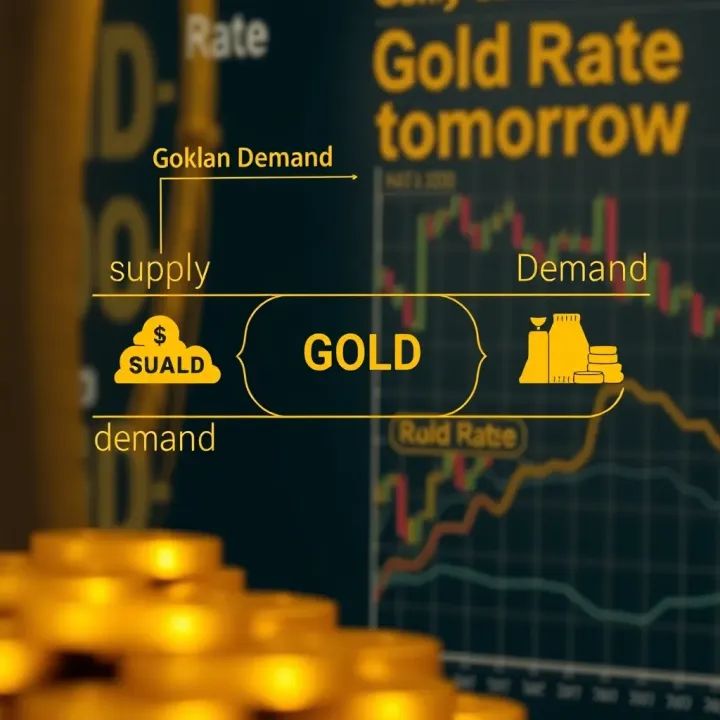
Supply-demand dynamics within India itself also matter. Festivals like Diwali or wedding seasons generally boost gold purchases, nudging prices higher. Conversely, if the Reserve Bank of India (RBI) tightens liquidity or changes import duties, expect an impact on rates the very next day.
In a nutshell, gold prices are a dance between global cues and domestic factors. Staying updated means you must track both closely.
Global Market Trends: Prices on the London Bullion Market and COMEX influence Indian prices indirectly.
Currency Exchange Rates: The INR–USD rate swings rapidly impact gold cost since India imports nearly all its gold.
Demand and Supply: Jewellery demand spikes or sell-offs by central banks can sway prices.
Government Policies: Import duty changes, GST rates on gold jewellery, or RBI’s monetary policy.
Follow real-time data from bullion exchanges like MCX in India.
Monitor currency movements through NSE or forex platforms.
Keep tabs on global economic news, especially US Federal Reserve announcements.
Use trusted market apps and websites that provide daily gold price forecasts.
By grasping these elements, financial analysts and traders can make sharper calls on gold rate movements, helping investors and buyers plan their next steps with confidence.
Understanding how gold prices are set in India is essential for traders and investors looking to gauge market movements and make informed decisions. Gold’s price in India doesn’t exist in a vacuum; it reflects a mix of global influences and local pressures. Knowing these factors can help you anticipate price shifts and better time your trades or investments.
Global bullion prices largely drive India’s gold rates. The international gold price, usually quoted in US dollars per troy ounce, affects what Indian buyers eventually pay. For instance, if global gold surges due to geopolitical uncertainty or rising inflation, India’s rates will typically follow suit. Traders must track these global benchmarks closely since currency changes and market sentiment abroad directly alter local prices.
Another major piece influencing gold price is the US dollar. Since gold is priced in dollars worldwide, fluctuations in this currency weigh heavily. A stronger dollar makes gold more expensive for buyers using other currencies, including the Indian rupee, potentially damping demand and prices in India. Conversely, a weaker dollar tends to push gold prices higher by making the metal cheaper for buyers outside the US. Given the rupee’s volatility against the dollar, this currency relationship often leads to short-term swings in India’s gold rate.
Import duties and the Goods and Services Tax (GST) heavily impact gold prices for Indian consumers. Since India relies extensively on gold imports, customs duties add a direct cost, which dealers pass on to buyers. For example, in recent years, import duty hikes have pushed prices higher, squeezing margins. GST on gold jewellery—currently at 3%—further influences retail prices. These taxes make it necessary to factor in government policies when predicting daily price movement.
Local demand fluctuates with cultural and seasonal trends, affecting gold prices significantly. Festivals like Diwali and Akshaya Tritiya traditionally see a spike in purchases, pushing demand and rates upward. Similarly, wedding season seasons in states like Rajasthan or Gujarat create pockets of intense buying. Traders observing these demand-driven price swings can use these patterns for smarter entry and exit points. On the other hand, demand typically cools post-festive seasons, sometimes causing price corrections.
India remains one of the largest global gold consumers. Hence, a deep grasp of both global and domestic elements helps investors stay ahead of the curve in anticipating tomorrow’s gold rate.
By focusing on these components, investors and market analysts can align their strategies with the factors actively shaping Indian gold prices.
Understanding the factors that drive gold prices for the next day can help investors and traders make timely decisions. Gold rates are influenced by a combination of currency movements, economic indicators, and global events. These drivers impact not just the price you see today but also set the tone for what to expect tomorrow.
The Indian rupee’s value compared to the US dollar plays a key role in determining gold prices. Since gold is globally priced in dollars, a weaker rupee makes gold costlier in India, pushing domestic gold rates up. For example, if the rupee falls from ₹75 to ₹76 per dollar overnight, gold imports become more expensive, raising next day prices. Traders keep a close eye on forex movements to anticipate these changes early.
India’s foreign exchange reserves also influence gold rates. When the Reserve Bank of India (RBI) intervenes to stabilise the rupee by selling or buying dollars, it affects currency availability, which can ripple through to gold pricing. If RBI decides to sell dollars to support the rupee, it may temporarily strengthen the currency and moderate gold price rises. Conversely, significant depletion in forex reserves can raise concerns, causing gold to be seen as a safe haven, potentially boosting its demand and price.
Inflation trends worldwide, especially in major economies like the US, signal how central banks set interest rates, impacting gold demand. High inflation generally reduces the value of paper currency, making gold a preferred hedge. For instance, if US inflation data due tomorrow shows a spike, investors might rush towards gold, anticipating price rises. Similarly, if the US Federal Reserve signals an interest rate hike, gold — which yields no interest — could see a drop in demand, causing prices to dip next day.
Unrest or conflict in key regions often stirs uncertainty in financial markets, driving investors toward gold as a safe asset. For example, escalating tensions between major economies or sudden market shocks can quickly push gold rates up overnight. Traders monitor global news closely since these events can cause sharp spikes or drops in gold prices in just a matter of hours.
Keeping track of these drivers enables better anticipation of gold price shifts, giving you an edge in making buying or selling decisions based on tomorrow’s expected rates.
For traders and investors in India, keeping a daily eye on gold prices is not just helpful; it's necessary. Gold rates can fluctuate sharply due to factors like global market changes, currency strength, or local demand spikes ahead of festivals. Monitoring these shifts daily allows you to make timely decisions—whether it's deciding the best moment to buy, sell, or hold your gold assets.
Several Indian financial websites and portals provide up-to-the-minute gold rates. Platforms like MCX India, the Bombay Bullion Association, and reputed financial news outlets update gold prices based on live market data from Mumbai's bullion market. These sites usually list prices for various purity levels such as 22-karat and 24-karat, helping traders and consumers gauge the precise rate per gram today or anticipate tomorrow’s expected rate. For instance, during the festive season, you might find sizeable shifts even within the day, making these platforms crucial for real-time information.
Mobile apps and live price trackers offer convenience by sending instant notifications of gold rate changes directly to your phone. This feature is especially valuable for those who cannot monitor prices all day but want to react quickly to sudden spikes or drops. Using apps from trusted sources ensures you catch even minor fluctuations that could mean the difference of thousands of rupees on bulk purchases. Besides prices, some apps also display historical trends and alerts, supporting more informed investment decisions.
Even if you're comfortable following prices, consulting market experts helps deepen your understanding of underlying movements. Renowned analysts often publish daily or weekly reports explaining why gold rates moved in a particular direction. Indian financial newspapers and platforms like Economic Times and Livemint regularly feature expert columns. Some brokerage firms also offer personalised advice or webinars covering anticipated gold price trajectories.
Analysts rely on a mix of global indicators—such as US inflation data, Federal Reserve interest decisions, and geopolitical risks—and local elements like Indian import duties or jewellery demand to forecast short-term gold price changes. Their insight into how foreign exchange rates affect the rupee’s strength and, consequently, gold affordability in India helps investors anticipate tomorrow’s prices better. Understanding these interpretations provides a broader context, allowing you to avoid decisions based solely on numbers without grasping the market sentiment behind them.
Staying updated through a combination of online tools and expert insights empowers you to respond smartly to gold rate shifts, reducing risk and enhancing your investment outcomes.
Understanding practical tips around buying and investing gold based on tomorrow’s rate helps you make smarter decisions, especially in a volatile market. Since gold prices can fluctuate daily due to global and domestic factors, timing and approach can significantly affect your returns or savings. This section offers useful guidance tailored for traders, investors, and market researchers to navigate those changes effectively.
Looking at recent gold price trends along with credible predictions allows you to pick a more advantageous moment to buy. For instance, if data shows that gold prices tend to dip slightly after major festival seasons due to lowered demand, you may time purchases just after this period for a better rate. Also, observing currency movements, especially the rupee-dollar exchange, gives hints on whether prices might rise or fall tomorrow. A weakening rupee often pushes gold prices up, so buying before such a trend may save you money.
Beyond the rate per gram, making charges and taxes can add significantly to your total cost when purchasing gold jewellery. Making charges, usually a fixed amount or percentage, should be compared across jewellers since they vary widely. Taxes such as GST (Goods and Services Tax) at 3% apply on both gold and making charges. For investors buying gold coins or bars, the GST is only charged on the making charges, often lower than for jewellery. So, factoring these costs in helps you calculate the actual price you pay, not just the gold rate displayed.
Systematic Investment Plans (SIP) in gold enable steady, disciplined buying over time, usually through digital gold platforms or gold ETFs (Exchange Traded Funds). This method averages out price volatility, so you avoid the risk of buying all your gold when prices peak. Investors benefit from rupee cost averaging, which smooths out sudden price jumps. Moreover, SIPs suit investors keen on gradually building their gold portfolio without the hassle of timing the market daily.
Speculative buying—purchasing gold based purely on short-term price predictions—can lead to losses when the market moves unexpectedly. For example, a sudden rise in the rupee or easing geopolitical tensions might swiftly lower gold rates. Traders chasing quick profits face high risks from such unpredictability, often incurring making charges and taxes on multiple transactions, which eat into their gains. Therefore, speculative buying suits only those with a solid understanding of market dynamics and a high risk tolerance.
Practical gold investment requires balancing timing with cost considerations and choosing between steady investment routes like SIP or riskier short-term trades.
📈 Explore India's gold price outlook for 2040, analysing economic shifts, global events, investment trends, and policy impacts shaping future valuation.
Discover the best time for forex trading in India ⏰ by understanding global market sessions and IST overlap. Maximise returns with practical trading tips and session insights 🌏💹.
📉 Explore how range markets behave, spot their signs, and master trading strategies tailored for them, focusing on factors and impacts in India's market.

Is Quotex legal in India? 🇮🇳 Explore the platform’s regulatory status, trading risks, and tips to trade smartly on Quotex within India's rules. 📊💡
Based on 14 reviews