
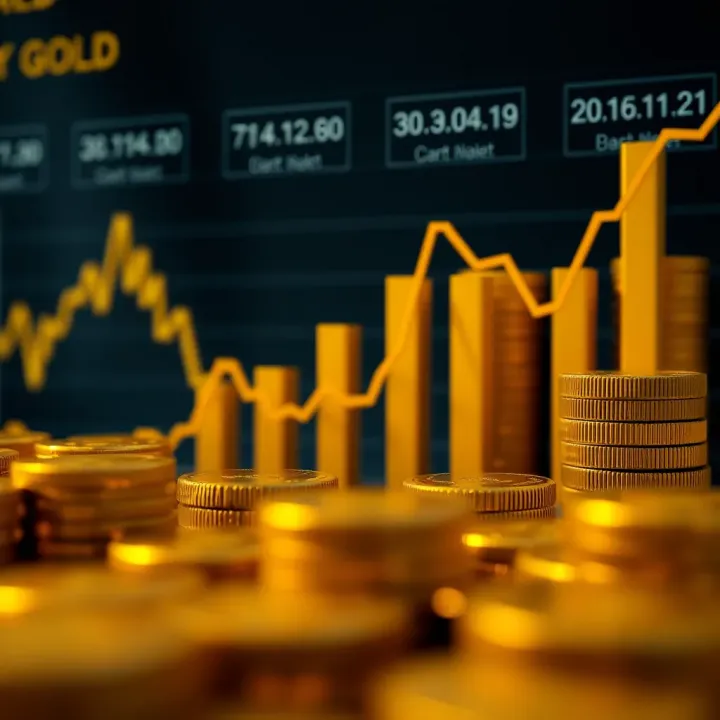
Gold Price Forecast in India for 2040
📈 Explore India's gold price outlook for 2040, analysing economic shifts, global events, investment trends, and policy impacts shaping future valuation.
Edited By
Amelia Hughes
Gold has long held a special place in India, more than just a commodity—it is woven into our culture, festivals, and even financial security. Over the decades, gold acts as a hedge against inflation and currency fluctuations, making it a favourite asset among investors and traders alike.
Looking ahead to 2040, predicting gold price trends in India requires understanding multiple factors at play. This includes historical price patterns, global economic conditions, domestic demand-supply dynamics, and government regulations such as import duties and jeweller licensing policies.

India's gold demand mainly drives from traditional uses in jewellery and investment products like sovereign gold bonds and ETFs. These demands fluctuate with economic cycles, income, and changing consumer preferences.
Several key drivers impact the gold price over the long term:
Global economic health: Inflation rates, US dollar strength, and geopolitical tensions globally affect gold’s safe-haven appeal.
Interest rates: RBI’s policy rates influence gold attractiveness since they affect the opportunity cost of holding non-yielding assets.
Supply factors: Domestic mining output is negligible, so India heavily relies on imports, making gold vulnerable to trade policy changes and currency movements.
Government policies: Import duties, GST rates, jewellery hallmarking regulations, and policies on gold monetisation can alter demand or supply channels.
Technological and investment innovation: New financial instruments related to gold, online trading platforms, and digital gold options also shape market accessibility.
Understanding these factors helps traders and investors make informed choices amid evolving market conditions. This article discusses these aspects in detail to offer an outlook on where gold prices might head by 2040 in India, supporting you in strategic decision-making and portfolio planning.
The subsequent sections will break down these elements to present a clear forecast grounded in historical data and current trends.
Understanding India's gold price trends over the years offers vital clues for forecasting its future, especially as we look towards 2040. Gold, deeply embedded in Indian culture and economy, has demonstrated patterns influenced by both global shifts and local factors. For investors and analysts, recognising these trends helps in anticipating potential price movements and strategising accordingly.
Over the past twenty years, gold prices in India have shown significant fluctuations, often mirroring global economic conditions while responding to domestic factors. For instance, between 2000 and 2010, the price of gold rallied sharply from around ₹4,000 per 10 grams to nearly ₹18,000 due to a combination of rising global demand, weakening dollar, and increasing inflation.
Post-2010, prices continued to rise, peaking around ₹29,000 in 2013 before a period of correction. This volatility stems largely from shifts in investor sentiment, changes in import duties, and evolving reserve trends within India. Over the recent five years, the growth in price has steadied but the onset of global disruptions like the COVID-19 pandemic caused spikes reflecting gold’s traditional status as a safe haven asset.
Several key events have steered gold prices in India remarkably. The 2008 global financial crisis, for example, saw a surge in gold prices as investors looked for safety amid unstable stock markets and a collapsing real estate sector. More locally, the government's changes in import duty in 2013—from 2% to 10%—temporarily curtailed demand but eventually pushed prices higher due to increased costs.
Further, the demonetisation move in 2016 shook demand dynamics. The sudden withdrawal of high-value currency notes impacted cash-driven gold purchases, primarily in rural and semi-urban markets. Nevertheless, over the following years, demand gradually rebounded, supported by festivals and weddings, which remain strong drivers of gold buying in India.
Gold’s journey over the last two decades clearly reflects the interplay of global crises, regulatory interventions, and traditional Indian buying patterns, all of which will continue shaping its price trajectory towards 2040.
These historical insights serve as a backbone for understanding what factors will carry weight in the long-term outlook. Traders and investors would do well to study past price behaviour carefully to gauge potential future moves in India’s gold market.
Gold prices in India are influenced by a mix of economic, currency, demand, and supply factors. Understanding these key drivers helps investors and market participants anticipate price movements leading up to 2040.
India's economic trajectory significantly impacts gold demand and prices. A steady GDP growth generally raises disposable incomes, which boosts consumer spending on gold jewellery and investment products. When inflation rises, gold often acts as a hedge, maintaining its value even as currency purchasing power declines. For instance, during periods when the Consumer Price Index (CPI) exceeds 6%, investors tend to flock to gold to preserve wealth, thus pushing prices upwards. However, sudden economic shocks or slowdowns can dampen demand, causing price fluctuations.

The Indian rupee’s strength against the US dollar plays a vital role in determining domestic gold prices since gold is globally traded in dollars. A weaker rupee makes gold imports costlier, directly lifting retail prices. For example, between 2012 and 2020, rupee depreciation consistently aligned with rising gold prices in India. Besides currency, global commodity price trends, especially in oil, indirectly influence gold. Higher oil prices often stoke inflation and increase production and transportation costs, contributing to gold’s appeal as an inflationary safeguard.
India's cultural affinity for gold keeps consumer demand robust. Jewellery purchases during festivals like Diwali and Akshaya Tritiya drive seasonal spikes. Urbanisation and rising income in tier-2 and tier-3 cities also widen the buyer base. On top of that, the financial sector is seeing rising demand for gold-backed financial instruments like Sovereign Gold Bonds (SGBs) and exchange-traded funds (ETFs), which adds new dimensions to overall gold demand beyond physical jewellery.
India imports nearly 80% of its gold needs, making it susceptible to global supply dynamics. Domestic mining contributes only a small fraction and faces challenges like regulatory hurdles and declining ore quality. Limited mining output means any disruptions in global supply or political instability in exporting nations could restrict availability, driving prices higher. Conversely, developments in mining technology abroad or new discoveries may ease supply pressures, stabilising prices.
Together, these factors show that gold pricing in India will remain a complex interplay of economic conditions, currency value, consumer behaviour, and supply realities. Investors should monitor these elements closely to navigate the evolving gold market effectively.
Government policies significantly influence gold prices in India, shaping market dynamics and investor behaviour. Regulations affect import costs, demand, and supply mechanisms, directly impacting both retail and institutional investors. Staying updated on policy changes enables traders and analysts to anticipate price movements more accurately and devise informed strategies.
Import duties play a crucial role in determining the landed cost of gold in India, where over 90% of gold is imported. Currently, the government levies an import duty of around 12.5%, including customs and GST components. Changes in these duties often lead to immediate price adjustments. For example, the increase in import duty from 10% to 12.5% in 2013 led to a sharp rise in domestic gold prices. Taxation on capital gains from gold sales also affects investor choices. Long-term capital gains are taxed at 20% with indexation benefits, while short-term gains attract higher rates based on income slab. Understanding these tax frameworks helps investors in effective portfolio planning.
Introduced in 2015, the Gold Monetisation Scheme (GMS) encourages citizens to deposit idle gold with banks. This scheme aims to mobilise domestic gold for productive use, reducing reliance on imports. Depositors earn interest on their gold deposits, providing an alternative income stream. Besides GMS, schemes like Sovereign Gold Bonds (SGB) offer tax benefits and appeal to investors seeking exposure without holding physical gold. These incentives can influence demand patterns and liquidity in the gold market, indirectly impacting prices. For instance, attractive interest rates under GMS can shift demand away from physical purchases, cushioning price volatility.
The Reserve Bank of India (RBI) plays a pivotal role in regulating the gold market through monetary policy and currency management. RBI’s interventions in foreign exchange markets influence the INR-USD exchange rate, which in turn affects gold prices in rupees. Additionally, the RBI regulates the import-export framework and circulars related to gold loans and pawnshops, impacting liquidity in the sector. The Securities and Exchange Board of India (SEBI) oversees commodity exchanges where gold futures trade, ensuring transparency and investor protection. Market participants should monitor RBI policy statements and regulatory updates from SEBI to gauge forthcoming shifts that may affect gold pricing.
Government policies form the backbone of gold price behavior in India. Whether through import tariffs, incentives like GMS, or RBI’s regulatory actions, these factors shape supply-demand dynamics and price trends significantly.
Understanding these elements allows investors and market analysts to make better predictions and adjust their strategies accordingly.
Forecasting gold prices two decades ahead helps investors, traders, and analysts navigate a complex market influenced by varied factors. These projections offer a lens to anticipate trends, prepare for economic shifts, and align portfolio strategies with expected market behaviour. By understanding expert forecasts, technological impacts, and potential risks, market participants can make informed decisions rather than speculate blindly.
Financial analysts often combine historical data with economic indicators to predict gold prices. Some experts expect gold to continue being a safe haven during times of economic uncertainty, suggesting a steady rise in its value by 2040. For example, analysts at leading Indian broking firms foresee gold prices crossing ₹12,000 per gram within the next decade, driven by inflationary pressures and stable demand from the jewellery and investment segments. However, expert views are not uniform; some anticipate periods of stagnation linked to global interest rates or policy tightening by institutions like the RBI.
Analysts also study macroeconomic factors such as GDP growth, currency strength, and geopolitical tensions, which heavily influence market confidence. Their insights alert investors about timing their entry or exit, balancing gold alongside equity or debt instruments.
Rapid tech advancements change how investors access and hold gold. Digital gold platforms let users buy and sell small gold quantities instantly, lowering barriers for retail investors. Blockchain is increasingly used to track gold provenance and reduce fraud, enhancing investor trust.
Besides, alternative assets like cryptocurrencies challenge gold’s appeal as a store of value. Despite crypto’s volatility, some Indian investors allocate a fraction of their portfolio here, potentially slowing the growth in gold demand. At the same time, financial products such as gold ETFs (exchange-traded funds) and sovereign gold bonds make gold investment more accessible without physical risks.
This shift towards digital and alternative investments may moderate physical gold demand but diversify investment avenues, affecting price dynamics through 2040.
Several risks cloud long-term gold price predictions. One major uncertainty is policy shifts — sudden changes in import duties, taxation, or export restrictions by the Indian government can ripple strongly through the domestic market. Currency volatility, especially fluctuations in the rupee against the US dollar, can disrupt price stability.
Global geopolitical developments also play a role. For instance, trade tensions or armed conflicts can drive investors towards gold as a safe asset, pushing prices up sharply. Conversely, peaceful relations and strong economic growth might dampen demand.
Emerging economic crises, advancements in alternative investments, and potential supply chain issues from mining outputs add layers of unpredictability. Hence, constant vigilance and flexible investment strategies remain crucial.
In short, while predictions provide a roadmap, understanding the ever-changing mix of economic, technological, and geopolitical factors is key to navigating gold investments in India towards 2040.
Investing in gold remains a popular choice among Indian investors due to its traditional value and ability to hedge against inflation. However, choosing the right investment approach is key to maximising returns and managing risks. This section explores practical considerations crucial to investors planning for the long term, particularly with an outlook extending towards 2040.
Long-term gold investment calls for a blend of discipline and awareness of market trends. Systematic Investment Plans (SIPs) in gold ETFs (exchange-traded funds) have become a favoured route, offering cost averaging and liquidity without the hassle of storing physical gold. For example, an investor started investing ₹5,000 monthly in a gold ETF in 2010 would have benefited from price appreciation along with ease of transaction through brokerage platforms like Zerodha.
Physical gold, like coins or jewellery, though sentimental, requires considerations of purity, making charges, and secure storage. For the long haul, sovereign gold bonds (SGBs) issued by the Government of India offer an attractive option by paying a fixed interest rate plus capital appreciation, along with exemption from capital gains tax if held till maturity.
Physical gold suits those who prefer tangible assets, often linked with cultural and auspicious sentiments, especially during festivals and weddings. However, it comes with risks of theft, valuation complexity, and additional costs such as making charges. On the other hand, financial gold products like gold ETFs and SGBs are easier to buy and sell, have lower transaction costs, and eliminate the need for physical safekeeping.
Investors prioritising liquidity and ease might prefer gold ETFs, while those looking for a blend of income and capital gains may find SGBs more beneficial. For instance, during periods of price volatility, financial gold's transparent pricing helps investors react swiftly.
Gold investments are not risk-free despite their reputation as safe havens. Price fluctuations influenced by global economic conditions, currency movements, and geopolitical risks can affect returns. Additionally, inflation or deflation impact gold differently; sometimes it may not keep pace with inflation leading to opportunity cost.
Mitigating risks involves diversifying portfolios beyond gold, monitoring global economic indicators such as the US dollar strength, and aligning gold investments with personal financial goals and time horizons. Regularly reviewing investment portfolios and being cautious of overexposure to gold—normally advised not to exceed 10-15% of overall assets—can help balance returns and volatility.
Long-term gold investment in India demands a strategic balance of asset type selection, risk assessment, and market awareness to optimise both security and growth potential.
Understanding these considerations will equip investors in making informed decisions that suit their financial aims and risk tolerance, especially as gold prices evolve towards 2040.
📈 Explore India's gold price outlook for 2040, analysing economic shifts, global events, investment trends, and policy impacts shaping future valuation.

Explore Baby Doge's price outlook until 2040, including market trends, tech advances, risks, and what investors should expect from this crypto token 📈🐕

📈 Explore how Reliance Industries' share price could evolve by 2040. Gain insights on growth, risks, and expert forecasts for long-term investors in India.
Explore Reliance Power’s 2040 share price forecast 📈 with in-depth analysis of its finances, market trends, policy impact, & renewable energy shifts.
Based on 10 reviews