

Future Outlook of Reliance Industries
📈 Explore how Reliance Industries plans to shape India’s economy with tech innovations, strategic moves, and tackle future market challenges ahead.
Edited By
Sophie Turner
The Dow Jones Industrial Average (DJIA) serves as a key indicator of stock market health, representing 30 large, publicly-owned companies in the US. For traders, investors, and analysts alike, understanding its probable future movements is essential to making sound financial decisions.
Predicting the Dow Jones is not about crystal-ball gazing; it requires analysing a mix of economic indicators, market sentiment, corporate earnings, and geopolitical events. For instance, when the US Federal Reserve adjusts its repo rate, the ripple effect often influences equity markets globally, including the Dow. Similarly, domestic factors like quarterly results of index heavyweights such as Apple or Microsoft can sway the market’s direction.

Forecasting techniques range from fundamental analysis, which digs into economic data and company performance, to technical analysis that studies historical price charts and patterns. Advanced tools include machine learning models that consider vast datasets, but even these must account for unpredictable global happenings like trade wars or pandemics.
Market volatility can spike unexpectedly due to global crises, making it vital for Indian investors eyeing US markets to stay updated on both local and international developments.
Investors should also watch how events like US elections, Federal budget announcements, or sudden oil price shocks might reshape expectations around the Dow’s trajectory. For example, the US-China trade talks or disruptions in Middle East oil supplies often lead to wide swings in the index.
Understanding the Dow’s predictions involves recognising token historical trends—for example, the January effect or post-budget optimism—while not relying on them blindly. Instead, balancing multiple factors and updates from credible expert analyses can help you gauge market sentiment better.
In practical terms, keeping an eye on the Nifty or Sensex alongside the Dow offers a broader picture of how global and Indian markets interplay, especially for those venturing into diversified portfolios.
This section sets the foundation by highlighting key drivers and methods behind Dow Jones forecasting, preparing you to scrutinise the finer details and scenarios that follow.
Understanding key elements influencing Dow Jones trends is vital for traders, investors, and analysts who want to anticipate market movements. These factors shape the index's overall direction and reveal potential risks or opportunities. By examining economic indicators, corporate earnings, and global dynamics, you can gain clearer insights into where the market may head next.
GDP growth signals the health of the economy, directly affecting the Dow Jones Industrial Average (DJIA). When GDP rises steadily, it often reflects increased business activity and consumer confidence, which can lift stock prices. For example, during India's steady GDP growth phases, sectors like technology and manufacturing saw robust gains; similarly, the DJIA benefits when the U.S. GDP shows consistent upward trends.
Inflation influences purchasing power, while interest rates affect borrowing costs for businesses and consumers. When inflation climbs beyond targeted levels, the Reserve Bank of India (RBI) or the U.S. Federal Reserve may hike interest rates to cool the economy. Higher rates typically pressure stocks, including Dow components, as companies face elevated financing costs and slower demand. For instance, rising interest rates in recent years caused notable volatility in the market, impacting sectors like real estate and utilities.
Employment numbers and consumer spending habits serve as key barometers for economic vitality. Strong job growth often boosts consumer confidence, leading to increased spending on goods and services, which helps corporate revenues. The DJIA components related to retail and consumer discretionary sectors usually respond positively to favourable employment reports. For example, when U.S. job openings rise, companies like Walmart and Home Depot tend to see their shares react accordingly.
Corporate earnings reflect the profitability and health of companies within the DJIA. Since major constituents like Apple, Boeing, and Goldman Sachs significantly influence the index value, their quarterly earnings results attract close attention. Strong earnings can propel the index upward, while disappointing numbers tend to drag it down. Traders often watch these reports to position themselves for short-term moves or long-term trends.
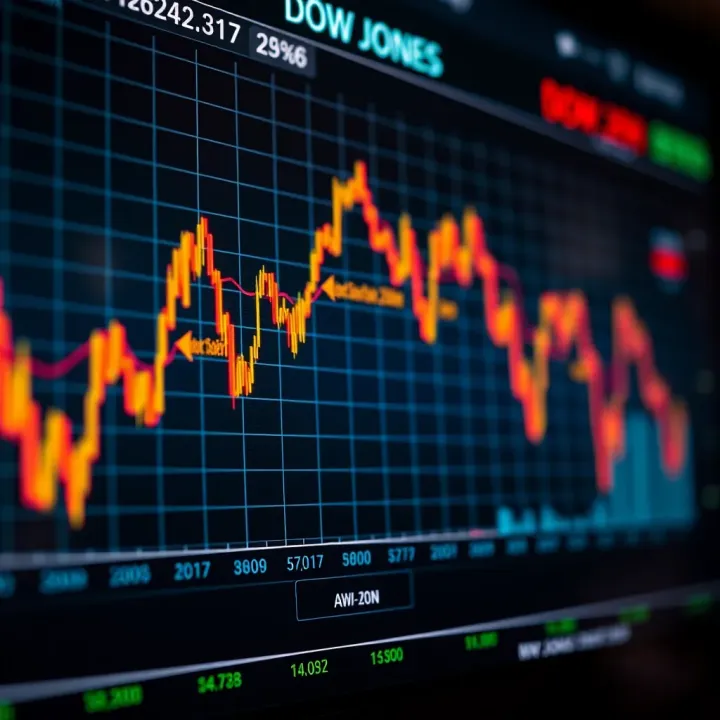
The Dow Jones is a price-weighted index, meaning higher-priced stocks influence its movement more strongly. Certain sectors—such as technology, finance, and industrials—carry larger weightages, which means their performance disproportionately impacts the index. For instance, a sharp rise in technology stocks like Microsoft can push the DJIA higher, even if other sectors lag. Understanding these sectoral dynamics helps investors adjust portfolios based on which industries dominate at a given time.
Trade agreements and tariffs affect multinational companies in the DJIA, impacting supply chains and profit margins. For example, tensions between the U.S. and China over tariffs have periodically caused swings in Dow Jones stocks involved in manufacturing and technology. Positive trade developments tend to ease cost pressures and enhance growth prospects, often boosting the index.
Political unrest, conflicts, or sanctions can unsettle markets globally. Dow Jones constituents with global exposure feel the impact through disrupted operations or increased costs. Recent geopolitical events in Eastern Europe and the Middle East have triggered market dips, highlighting how sensitive the index is to such developments.
Movements in foreign stock markets can influence the Dow as investors react to global economic conditions. If major markets in Europe or Asia experience downturns, it may prompt risk aversion by traders in the U.S., affecting DJIA performance. Conversely, strong foreign markets often signal global economic strength, lending support to U.S. equities.
Clear knowledge of these key elements helps you make grounded decisions rather than relying on guesswork when navigating the Dow Jones movements. Tracking economic indicators along with corporate and global factors provides a comprehensive picture necessary for effective market engagement.
Predicting Dow Jones movements requires a mix of methods that capture different market signals. Combining fundamental, technical, and quantitative tools helps traders and investors understand where the index might head next. These techniques offer practical ways to analyse data, spot trends, and manage risk.
Company valuations and financial health focus on assessing the actual worth and economic strength of companies within the Dow Jones Industrial Average. Investors often examine price-to-earnings (P/E) ratios, debt levels, and cash flow to gauge whether stocks are overvalued or undervalued. For example, a company like Apple or Microsoft showing strong earnings growth and manageable debt tends to support upward pressure on the index. Understanding these fundamentals helps forecast long-term moves better than market noise.
Economic cycle analysis considers the broader phases of the economy—expansion, peak, contraction, and trough. The Dow Jones tends to rise during economic expansions due to increased corporate profits and consumer demand. Conversely, during recessions, the index usually faces pressure as earnings decline and uncertainty grows. Tracking indicators like industrial production or consumer sentiment gives useful context on where the economy stands, enabling smarter timing for market entry or exit.
Trend lines and chart patterns are visual tools used to identify potential reversals or continuation in the Dow Jones movements. Trend lines connect past price points, signalling support or resistance levels. A rising trend line might suggest ongoing strength, while patterns like ‘head and shoulders’ or ‘double bottom’ provide clues to upcoming direction changes. For instance, a breakout above a resistance trend line often attracts buying interest, speeding a rally.
Moving averages and momentum indicators smooth out price fluctuations for clearer trend recognition. Moving averages like the 50-day or 200-day provide signals when shorter-term averages cross longer ones, indicating bullish or bearish trends. Momentum indicators such as the Relative Strength Index (RSI) measure the speed of price changes—an overbought RSI could warn of a pullback. These tools are practical for timing trades and avoiding emotional decisions amid market swings.
Algorithmic prediction methods use mathematical formulas to automate market predictions. They factor in various inputs like volume, price, and volatility to generate buy or sell signals without human bias. For instance, hedge funds employ algorithm-based systems that continuously scan Dow Jones constituents to exploit small price inefficiencies.
These models can handle complex data faster than any individual but must be regularly updated to adapt to new market conditions.
Use of big data and AI in forecasts involves analysing massive datasets, including news sentiment, social media trends, and economic indicators, to generate insights. AI algorithms can detect hidden patterns that traditional analysis might miss. For example, machine learning models could combine global trade data with company earnings to predict Dow Jones fluctuations more accurately. This approach offers dynamic, real-time forecasting that enhances decision-making for traders and investors alike.
Together, these techniques provide a comprehensive toolkit for navigating Dow Jones movements, each complementing the others to offer both short-term signals and long-term perspectives.
Understanding expert opinions and market sentiments is key to making informed predictions about the Dow Jones Industrial Average (DJIA). These perspectives offer a window into how experienced analysts and traders interpret market data and behavioural trends, providing valuable clues about the index's future direction. This section highlights the practical benefits of factoring in such insights, which can complement technical and fundamental analysis.
Bullish and bearish perspectives reflect the contrasting outlooks on the Dow Jones. A bullish view suggests confidence in continued growth, often supported by positive economic data or strong corporate earnings—for example, strategists might point to robust quarterly results from heavyweight companies like Apple or Microsoft as a sign of upward momentum. On the other hand, bearish views arise from concerns such as rising inflation or geopolitical uncertainties that could push the index down. For instance, analysts warning about an overheating economy or tightening monetary policies signal caution. When you weigh these perspectives, you get a balanced picture of potential risks and rewards.
Consensus forecasts for short and long term help distil diverse expert opinions into an average expectation. Short-term forecasts usually focus on upcoming events like earnings seasons or policy announcements. For example, ahead of the Reserve Bank of India's monetary policy review, analysts might collectively predict volatility in related US markets, including the DJIA. Long-term consensus considers broader economic cycles or structural changes such as technological innovation or demographic shifts. These consensus views can guide investors on suitable entry or exit points depending on their investment horizon.
Behavioural finance elements explain how psychological factors influence investor behaviour, which in turn affects the Dow Jones. Emotional reactions like fear or greed can lead to excessive buying or selling, causing price swings detached from fundamentals. Take the flash crash of May 2010—panic selling triggered a rapid plunge in the DJIA, even though economic indicators were intact. Recognising such patterns helps investors anticipate potential overreactions and avoid knee-jerk decisions.
Role of market speculation often amplifies short-term movements in the Dow Jones. Speculators may trade based on news, rumours, or technical signals, sometimes creating temporary price bubbles or dips. For example, during the tech boom of the late 1990s, speculation drove the index to unsustainable highs before the eventual correction. Understanding speculation's influence allows traders to spot when prices might diverge from the fundamental value, presenting opportunities or warnings.
Expert opinions and market sentiment together form a crucial part of Dow Jones forecasting by integrating data with human behaviour, enabling smarter trading and investment choices.
Analysing possible scenarios for the Dow Jones in the near future helps investors prepare for different market conditions. By understanding both optimistic and challenging factors, traders and analysts can adjust their strategies proactively. For example, recognising signs of economic recovery or sectoral growth may encourage taking on more equity, while awareness of inflation risks or regulatory hurdles can prompt cautious rebalancing.
Economic recovery prospects play a significant role in shaping an optimistic view of the Dow Jones. If indicators like GDP growth, rising consumer spending, and improving employment data continue to strengthen, they tend to boost investor confidence. For instance, after the disruptions caused by the pandemic, a steady recovery in service industries and manufacturing could drive higher earnings for DJIA constituents, pushing the index upward.
Technological sector growth is another key factor energising positive forecasts. Technology companies contribute heavily to the Dow's performance, so innovations or strong quarterly results in firms like Microsoft, Apple, or Intel can lift the entire index. With increasing digital adoption, cloud computing, and AI investments, the tech sector's momentum might support further gains, offering attractive opportunities for investors watching the Dow closely.
Inflation pressures remain a major threat to sustained index growth. Rising inflation erodes purchasing power and can lead the Reserve Bank of India (RBI) or the Federal Reserve in the US to hike interest rates. When borrowing costs increase, company profits may suffer, negatively impacting stock prices. For example, persistent inflation above expectations could cause market sell-offs or volatility in the Dow.
Policy changes and regulatory hurdles add another layer of uncertainty. Sudden shifts in trade policies, tax regulations, or stricter compliance requirements might disrupt corporate earnings. For instance, new tariffs or environmental regulations could raise costs for industrial firms within the Dow, causing caution among investors. Staying alert to such developments is critical for anyone tracking the index.
Diversification benefits make the Dow Jones an interesting consideration for Indian investors. Including US equities within a broader portfolio can reduce overall risk, as the Dow often moves differently compared to Indian markets like the Nifty 50 or Sensex. This diversification can help smooth returns, especially during domestic market downturns.
Using Dow Jones trends for portfolio adjustments allows Indian investors to time their exposures better. If the Dow signals a potential downturn due to global factors, they might reduce overseas allocation or hedge through derivatives. Conversely, during phases of global economic recovery, increasing holdings in US index funds or ADRs (American Depositary Receipts) linked to the Dow can add growth to portfolios. Such responsive adjustments enable more informed, flexible investing.
Understanding the possible trajectories for the Dow Jones equips investors with practical foresight, helping them navigate risks and capitalise on growth opportunities in a complex global market.
📈 Explore how Reliance Industries plans to shape India’s economy with tech innovations, strategic moves, and tackle future market challenges ahead.

📈 Discover Ripple Coin's future price trends, expert insights, and key factors affecting XRP's value in India and global markets. Stay informed, trade smart!

Explore Ripple XRP price trends 📈, market shifts, regulatory effects 🏛️, and expert views to navigate India's crypto space confidently ⚡️

📈 Explore the future of Reliance Industries' share price by 2030, including market trends, economic factors, key opportunities, and risks for investors.
Based on 6 reviews