
Cardano (ADA) Price Prediction and Market Analysis
Get detailed Cardano (ADA) price prediction 📈 with insights on current trends, tech progress, market signals, expert views, and risks to guide your investment choices.
Edited By
Emily Bennett
Cardano (ADA) has emerged as a major player in the cryptocurrency sector, catching the attention of traders and investors worldwide. Unlike many coins that rely solely on hype, Cardano combines academic research with a peer-reviewed approach to blockchain development. This foundation makes ADA’s price movements particularly interesting to analyse, especially for those looking to understand its market trajectory.
The ADA coin price often reflects a mix of technological developments, market sentiment, and broader crypto trends. For instance, updates like the Alonzo hard fork, which introduced smart contract capability on Cardano, significantly affected its price, showing how key network upgrades influence investor confidence. Similarly, partnerships with governments or institutions, such as those seen in African blockchain projects, tend to bolster ADA’s market standing.
Understanding these interconnections is vital if you want to make informed predictions about Cardano’s price trends.
Several factors shape Cardano's price outlook:
Regulatory landscape: Indian and global regulations can heavily impact ADA’s accessibility and investor appeal.
Market volatility: Crypto markets tend to move sharply, and ADA is no exception during speculative phases.
Development progress: Timely execution of roadmap milestones often translates into price rallies.
Adoption rate: Growing use cases in decentralized finance (DeFi) or non-fungible tokens (NFTs) can push demand higher.
Given this, traders and financial analysts keep a close eye on both technical indicators and the broader ecosystem updates. This article looks into historical trends, analyses current factors, and offers expert insights to help you navigate Cardano’s price movements more effectively.
By aligning your investment approach with these tangible signals and cautious forecasting, you can better position yourself in what remains a dynamic and often unpredictable crypto market.
Understanding Cardano's fundamentals and its standing in the cryptocurrency market is key to grasping the factors that drive its price movements. A clear overview helps traders and investors make informed decisions by recognising the project’s strengths and weaknesses.
Cardano is a proof-of-stake blockchain platform designed for scalability, security, and sustainability. Unlike proof-of-work networks like Bitcoin, Cardano uses the Ouroboros protocol to validate transactions efficiently while consuming less energy. This focus on eco-friendly technology appeals to investors looking beyond just profits, as regulatory pressure on energy-intensive cryptocurrencies has risen.
Cardano distinguishes itself through a layered architecture separating the settlement layer from the computation layer. This separation allows upgrades and smart contract deployment without disrupting the payment system. For example, the Alonzo upgrade introduced smart contracts, enabling decentralised finance (DeFi) and other applications on its network, boosting Cardano's utility beyond mere transactions.
Moreover, Cardano’s emphasis on peer-reviewed academic research aims to reduce bugs and vulnerabilities. This rigorous approach has attracted a loyal following among developers and investors keen on long-term potential rather than quick gains.
Cardano has consistently ranked among the top cryptocurrencies by market capitalisation, often within the top ten. Its large community and backing by IOHK have supported steady development and adoption.
Price movements have reflected both market cycles and network developments. For instance, Cardano's price surged near the Alonzo hard fork in late 2021, signalling market optimism about smart contract capabilities. However, like many altcoins, it has experienced periods of sharp corrections during broader market downturns.
When compared to competitors such as Ethereum, Cardano trades at a lower price but offers a different value proposition—primarily energy efficiency and robust formal methods. Institutions investing in sustainable blockchain projects often consider Cardano as a viable choice, influencing its demand.
For investors and analysts, recognising Cardano’s technical foundation alongside its market behaviour offers a balanced perspective to evaluate future price trends realistically.
In summary, Cardano’s unique blockchain fundamentals combined with its influential market presence form the backdrop against which price predictions should be made. This understanding helps cut through hype and guides sound investment strategies.
Understanding the factors behind Cardano's price movements is essential for traders and investors aiming to navigate the volatile cryptocurrency market. These factors shape how Cardano (ADA) responds to external events and internal developments, directly impacting investment decisions. Recognising these helps you assess potential risks and opportunities effectively.
Cardano’s price often reflects progress in its technology and network upgrades. For instance, the launch of the Alonzo hard fork in September 2021 introduced smart contract capabilities, allowing developers to build decentralised applications (dApps) on the Cardano blockchain. Such milestones boost market confidence as they increase the platform’s utility and adoption potential. Similarly, upcoming enhancements like Hydra—Cardano’s proposed layer-2 scaling solution—could improve transaction speed and reduce fees, making ADA more attractive to users and investors alike.
Regular software updates, peer reviews, and collaborations with academic institutions also demonstrate Cardano’s commitment to security and innovation. These technical advances tend to cause positive market reactions, reflected in price surges following announcements.
Investor psychology strongly influences Cardano’s price trends. Positive news, celebrity endorsements, or interest from institutional investors often create bullish sentiment. For example, when large funds or well-known personalities publicly support ADA, retail investors tend to follow, pushing the price up.
Conversely, fear, uncertainty, and doubt (FUD) stemming from hacks, project delays, or negative media coverage can trigger sell-offs. Platforms like social media and cryptocurrency forums amplify these sentiments quickly, causing sharp price moves not always tied to fundamentals. Recognising patterns in market sentiment helps traders time their entry or exit points more accurately.
Cryptocurrencies including Cardano face growing scrutiny from regulators worldwide. Changes in policies such as stricter KYC/AML (Know Your Customer/Anti-Money Laundering) rules, bans on crypto trading, or taxation frameworks can affect ADA’s demand.
India itself is moving towards clearer crypto regulations under the Finance Ministry and Securities and Exchange Board of India (SEBI). Any announcements regarding legal clarity or bans tend to sway prices substantially. Investors closely monitor global regulatory trends too, as countries like the USA, China, and the EU significantly influence market confidence.
Macroeconomic factors play a part in Cardano’s price movements. When inflation rates rise or fiat currencies weaken, some investors turn to cryptocurrencies like ADA as a hedge.
Global events such as geopolitical tensions, stock market volatility, or financial crises can increase demand for decentralised assets. For example, during tight monetary policies or economic uncertainty, cryptos often see heightened interest. Similarly, growth in blockchain adoption in areas like DeFi (Decentralised Finance) and NFTs (Non-Fungible Tokens) globally also drives demand for Cardano’s native token.
Consider these factors together rather than in isolation to get a clearer picture of Cardano’s price dynamics, especially for planning investment strategies.
Understanding these diverse influences equips you better to anticipate price shifts and manage your portfolio accordingly.
Understanding Cardano’s past price behaviour offers valuable lessons for investors and analysts aiming to forecast its future movements. Historical trends highlight the coin’s response to market shocks, technological upgrades, and external economic factors. Examining volatility patterns reveals periods of stability contrasted with sharp swings, equipping traders to manage risk and time entries better.
Cardano’s price journey has seen significant milestones that mark its growing adoption and development progress. In early 2018, ADA reached around ₹150 for the first time, driven by the overall crypto market fervour. However, this peak was followed by a steep correction during the 2018 crypto winter, pushing prices below ₹10 by year end. This dramatic fall exposed the market’s sensitivity to broader sentiment.
The coin’s revival began in late 2020, coinciding with the launch of its Shelley upgrade, which introduced decentralisation features. ADA climbed steadily, surpassing ₹200 by February 2021 and peaking at roughly ₹350 in September 2021. Yet, it again faced corrections amid the market-wide sell-off triggered by regulatory concerns in China and US Federal Reserve rate hike fears.
Such milestones and pullbacks underscore Cardano’s volatile nature despite solid fundamentals. For investors, recognising these patterns is vital to avoid panic selling or overenthusiastic buying at unsustainable highs.
Cardano’s price often moves in waves correlated with key project milestones and general crypto market cycles. Periods of consolidation tend to follow major upgrades or announcements, allowing the market to digest new information. For example, after Shelley, Cardano saw a steady climb until the launch of smart contract functionality through the Alonzo upgrade caused a bullish surge in August 2021.
Volatility spikes commonly appear during such events but settle afterward, reflecting a pattern where excitement drives short-term gains before a more measured trend emerges. Moreover, price movements mirror global crypto market trends where bull runs and bear declines impact ADA alongside Bitcoin and Ethereum, albeit sometimes with sharper swings due to lower liquidity.
Traders and investors should monitor Cardano’s historical price patterns along with broader market signals to gauge entry and exit points effectively.
In summary, reviewing Cardano’s historical price trends and volatility offers practical insights into its behaviour. Key milestones and corrections teach caution, while recurring patterns signal opportunities for informed trading decisions. This understanding forms the bedrock for predicting Cardano’s price trajectory amid fluctuating market conditions.
Expert predictions and market analysis are vital for investors aiming to navigate the volatility of Cardano’s price. By examining forecasts from seasoned analysts and comparing Cardano with other cryptocurrencies, traders can make informed decisions rather than relying on speculation. This section highlights how these insights clarify probable price directions and risks, complementing the historical data and fundamental factors explored earlier.
Cryptocurrency analysts study market patterns, project technical indicators, and assess Cardano’s development roadmap to estimate price movements. For example, analysts from platforms like CoinDesk and CryptoCompare often emphasise ADA’s upcoming upgrades as key price drivers. When Cardano introduced the Alonzo hard fork enabling smart contracts, experts anticipated a price surge, which followed as DeFi projects started building on its blockchain.
These professionals also consider broader market cycles. During bullish phases, some analysts predict ADA reaching new highs, supported by increasing staking participation and network adoption. Conversely, bearish projections might warn of pullbacks due to regulatory doubts or declining overall crypto sentiment. Analysts often use tools such as moving averages, RSI (Relative Strength Index), and Fibonacci retracements to identify entry and exit points specific to Cardano trading.
Putting Cardano’s price prediction alongside major cryptos like Bitcoin (BTC) and Ethereum (ETH) provides context on its potential and risks. Bitcoin’s movements often set the tone for the entire market; thus, ADA price action can correlate closely with Bitcoin’s trend. For instance, when Bitcoin broke past ₹40 lakh in early 2024, Cardano’s price also showed positive momentum, reflecting investor confidence.
Ethereum’s advancements in DeFi and NFT ecosystems offer a benchmark for Cardano’s smart contract ambitions. Analysts compare transaction speeds, fees, and developer activity — all factors influencing ADA’s market value. While Cardano aims for energy-efficient proof-of-stake consensus, Ethereum’s transition to Ethereum 2.0 similarly affects investor sentiment, highlighting competitive pressures.
Expert advice is not foolproof but serves as a strategic tool amidst volatile crypto markets. Combining analyst insights with individual research ensures better investment choices.
Understanding expert predictions equips traders with practical scenarios and risk assessments. Comparing Cardano with its peers also puts its price prospects in perspective, helping market participants to align their strategies with realistic market dynamics.
Examining potential price scenarios for Cardano (ADA) is vital for traders and investors who want to make informed decisions. This section highlights how current market trends, technology updates, and external challenges could shape ADA's value soon. Understanding these possibilities helps manage risk and seize opportunities efficiently, especially in the volatile cryptocurrency space.
Cardano’s recent upgrades, including the Vasil hard fork, have enhanced network scalability and transaction speed. These improvements attract developers and projects to the Cardano ecosystem, boosting demand for ADA tokens. For instance, decentralised finance (DeFi) platforms launching on Cardano could increase token usage, creating upward pressure on price.
Growing institutional interest in cryptocurrencies also favours ADA’s prospects. As Indian exchanges and global funds diversify portfolios, Cardano may benefit from increased inflows. Moreover, Cardano’s focus on energy-efficient proof-of-stake compared to Bitcoin’s energy-heavy mining appeals to environmentally conscious investors, enhancing its market appeal.
Positive macroeconomic indicators, such as rising inflation and weakening fiat currencies, often push investors towards cryptocurrencies. This trend could provide further momentum for ADA, pushing prices beyond recent highs. Also, partnerships in emerging markets, particularly in education and supply chain sectors, may strengthen Cardano’s utility and long-term valuation.
Strong network upgrades combined with rising global interest suggest Cardano is positioned for bullish momentum in the near future.
Despite its potential, Cardano faces risks that could weigh down its price. Regulatory uncertainties remain a major concern. Sudden clampdowns or unfavourable rules in key markets like the US, Europe, or India could limit adoption and deter investors.
Market volatility, often driven by external factors like geopolitical tensions or sharp corrections in Bitcoin, can drag ADA prices downward. If market sentiment sours, liquidity might dry up, causing swift sell-offs.
Technical challenges also pose risks. Delays or bugs in protocol upgrades might shake investor confidence. For example, if the Marlowe smart contract platform faces issues, it could slow DeFi growth on Cardano, limiting demand for ADA.
Finally, stiff competition from faster or more widely adopted blockchains such as Solana or Polkadot might cap ADA’s market share. Investors may shift to alternatives promising higher yields or better scalability.
Investors should watch for regulatory developments, technical stability, and market mood to manage bearish risks effectively.
In summary, Cardano’s near-future price depends on how these bullish and bearish factors unfold. Keeping a close eye on network progress, regulatory news, and market trends remains key for making well-grounded investment decisions.
Get detailed Cardano (ADA) price prediction 📈 with insights on current trends, tech progress, market signals, expert views, and risks to guide your investment choices.
📊 Explore Amp price trends, key factors influencing its value, expert views, and market insights to make informed investment decisions in digital collateral tokens.
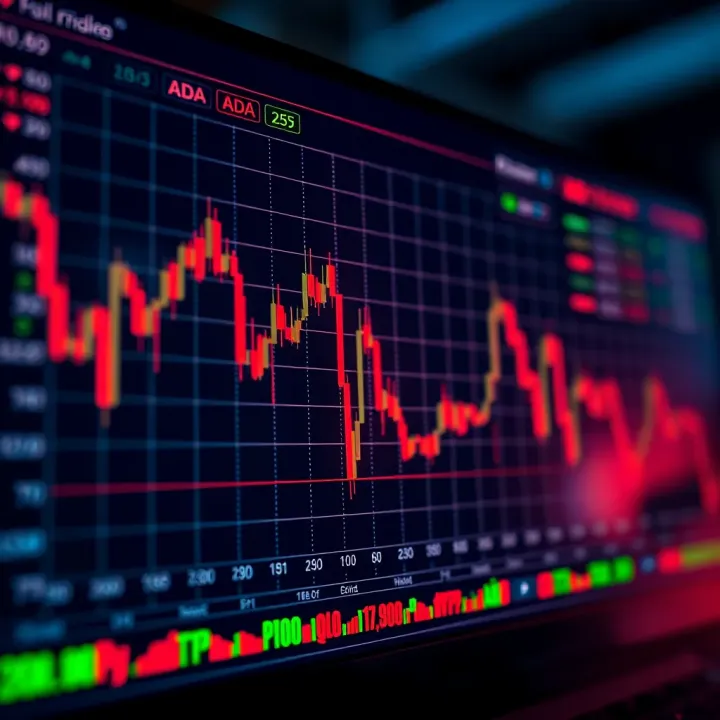
Explore Cardano (ADA) price outlook with expert insights, technical and fundamental analysis, risks, and market trends to guide Indian investors in crypto decisions 📈₹
📈 Explore Ava Coin price trends, technical analysis, and expert views to understand its future potential and investment risks in the coming years.
Based on 10 reviews