

RBI-Approved Forex Trading Apps in India
📱 Explore RBI-authorized forex trading apps in India with insights on regulations, key features, and tips for safe, compliant currency trading. 💹🌐
Edited By
Liam Clarke
Forex paper trading apps offer Indian traders a chance to practice currency trading without putting real money on the line. These simulators mimic actual market conditions, allowing you to hone your trading skills and strategies risk-free. For freshers in forex or even seasoned traders wanting to test new ideas, these apps act as a safe playground.
The major benefit lies in building confidence. Before facing the pressures of the live market, you can observe how your decisions pan out, learn from mistakes, and refine your approach. Since forex trading involves rapid price movements and high leverage, paper trading lets you develop discipline without risking losses.

When choosing an app, consider several factors:
Realistic market simulation: Ensure the app reflects live price feeds and trading costs.
User interface: A simple layout helps you focus on strategy, not app navigation.
Variety of currency pairs: More options help explore diverse trading opportunities.
Educational tools: Tutorials or in-app resources add value.
Customisable settings: Features like leverage adjustment and order types give flexibility.
Some popular options for Indian traders include MetaTrader 4, TradingView, and Forex Tester. Each has unique strengths; MetaTrader 4, for example, is widely used with extensive community support, while TradingView offers powerful charting tools.
Practising with a trusted forex paper trading app reduces costly errors and builds a solid foundation for real trades.
Keep in mind, paper trading can’t replicate the emotional stakes of actual trading fully. Handling real money can trigger hesitation or greed, aspects that simulation might not prepare you for. However, it remains a practical first step to understand market behaviour and test strategies.
Next, we will look at key features to focus on when picking the right forex paper trading app that suits Indian market requirements and your personal trading style.
Forex paper trading is a practice mode that lets traders simulate buying and selling currencies without using real money. Think of it as a flight simulator for pilots but for forex traders. This approach is especially useful for anyone new to currency markets or for those trying out new strategies without risking their hard-earned savings.
Paper trading involves placing virtual trades in a simulated environment that mimics real market conditions. The prices move as they would in a live market, but since no actual money changes hands, traders only track performance on paper. For example, an Indian trader can practise entering and exiting USD/INR trades repeatedly to understand market behaviour without any financial consequences.
The major difference lies in the risk factor. In live trading, your capital is at stake with every move you make, whereas paper trading is completely risk-free. This makes paper trading more forgiving but less stressful. However, because no real money is involved, it does not fully capture the emotional pressure many traders feel during live sessions, such as fear or greed influencing decisions.
Indian traders, especially freshers or those new to forex, can use paper trading to grasp market mechanics without worrying about losing money. For instance, someone practising on an app like Investfly or MetaTrader demo can hone skills on currency pairs like EUR/USD or GBP/INR before stepping into actual trades.
Paper trading demands planning trades, setting stop-loss, and sticking to strategies — just like live trading. This helps develop consistent habits and discipline. A trader who strictly follows their paper trading journal to track wins and losses builds routines that will benefit them once they transition to real capital exposure.
Forex markets can be volatile, so testing new strategies directly with real money can be risky. Paper trading lets Indian market participants experiment with different entry points, leverage levels, or technical analysis tools without any downside. For example, you might try a moving average crossover strategy on the USD/JPY pair in a demo account before applying it live.
Paper trading acts as a rehearsal space, allowing Indian traders to refine their skills, understand market behaviour, and build confidence before risking actual capital.
Understanding these aspects clarifies why paper trading is a vital step for anyone serious about forex trading in India. It bridges the gap between theory and real experience, making the shift to live trading more informed and less daunting.

Selecting the right forex paper trading app is vital for Indian traders aiming to build skills and test strategies without risking capital. A well-designed app bridges the gap between theory and actual trading by simulating realistic market conditions. Here are the key features that determine how effective an app will be in improving your trading confidence and technique.
Simple navigation is crucial to prevent frustration during practice sessions. An app cluttered with confusing menus can distract more than help, especially when you need to react quickly to changing market data. For example, having quick-access tabs for different currency pairs and straightforward order entry buttons saves time and keeps you focused on learning.
Clear chart presentations help you interpret price movements and patterns easily. Charts should support zoom-in and zoom-out options, multiple time frames, and different types like candlestick or line charts. A clutter-free design with colour-coded trend lines and indicators allows you to spot opportunities faster and make informed decisions while paper trading.
Accuracy of simulated prices is essential to reflect true market behaviour. If the app’s pricing deviates significantly from live market rates, it can mislead your learning process. For instance, practising on outdated or too-smooth price feeds won’t prepare you for the sudden spikes or dips common in forex trading.
Delay or latency concerns also affect the trading experience. Even a few seconds’ lag between actual market movements and the simulation can cause your orders to execute at unrealistic prices. Indian traders should seek apps with minimal latency to mirror real-world trading speed, especially during volatile sessions like the London or New York open.
Technical indicators such as moving averages, Relative Strength Index (RSI), and Bollinger Bands allow you to test how different strategies perform under various market conditions. Having built-in indicators saves you from switching between platforms and lets you focus fully on practising.
Backtesting options let you apply your strategy to historical forex data to evaluate its effectiveness. It helps in filtering losing tactics before you attempt them in real-time. Apps offering flexible backtesting across various currency pairs carry added value for serious learners.
Custom alerts and notifications keep you informed about price movements or technical setups without constantly monitoring the app. For Indian traders who might be balancing trading with a day job, these alerts ensure no trading opportunity or risk slip unnoticed.
Mobile and desktop versions provide flexibility in where and how you practice. A mobile app lets you trade on the go, while desktop platforms often offer an expanded toolkit suited for detailed analysis. Some apps sync your trades and preferences across devices so you can shift smoothly between them.
Support for Indian payment and account linking becomes important if you plan to switch from paper trading to live with the same broker. Features allowing easy integration with Indian bank accounts, UPI, or wallets like Paytm make the transition smoother and save time during onboarding for live trading.
Choosing an app with these core features helps you develop the skills Indian forex traders need without facing unnecessary hurdles—making your training time both efficient and realistic.
Choosing the right forex paper trading app matters, especially for Indian traders who face unique market conditions and regulatory requirements. Popular apps that cater specifically to Indian users often offer smoother integration with local brokers and comply with domestic regulations, which boosts confidence while practising forex strategies.
Integration with Indian brokers is a vital feature for paper trading apps aimed at Indian users. This integration means you can link your simulated trades with real brokerage accounts or use platforms that mimic the trading conditions provided by Indian brokers like Zerodha, Angel Broking, or ICICI Direct. For instance, apps connected to these brokers offer Indian currency pairs, Indian market timings, and realistic order execution models that reflect local market behaviours. This alignment helps you gain experience in trading that feels closer to live trading in India.
Compliance with Indian regulations ensures the app operates within the framework set by the Securities and Exchange Board of India (SEBI) and other regulatory authorities. Forex trading in India is tightly controlled, with certain currency pairs and leverage restrictions in place. An app compliant with these rules prevents exposure to unapproved trades and helps traders stick to legal boundaries. This not only protects users legally but also helps build habits aligned with India’s forex market norms.
Several international platforms like MetaTrader 4 and 5, TradingView, and Thinkorswim offer paper trading features with a wide range of analysis tools. Features and benefits include access to global currency pairs, comprehensive charting tools, and a large community of traders for strategy sharing. These platforms often have sophisticated backtesting features, helping users refine their systems against historical data.
When considering suitability for Indian traders, these platforms may lack direct integration with Indian brokers or compliance tailored to Indian rules. Still, they offer a valuable global perspective and advanced tools often missing in local apps. Traders can use these platforms to understand global forex trends, which significantly impact INR pairs trading.
Cost considerations play a big role, especially for individual traders or freshers starting out. Free versions of apps often provide sufficient basic features for beginners to learn and test strategies without any financial commitment. However, these may come with ads, limited data access, or restricted functionality.
Feature differences become apparent when you opt for premium versions. Paid plans generally offer advanced charting, faster data updates, multiple account simulations, and priority customer support. For example, premium subscriptions in platforms like TradingView unlock detailed technical indicators and real-time alerts, which can be quite helpful. For Indian users, weighing these features against the subscription cost is essential to decide if the upgrade truly adds value to their learning curve.
Selecting the right paper trading app involves matching toolsets to your learning needs while considering Indian market realities and costs. This practical approach helps you sharpen skills efficiently before real money comes into play.
Forex paper trading apps serve as useful tools for practising currency trading without risking real money. Still, traders should be aware of their limitations to avoid unrealistic expectations and prepare better for live markets. Understanding these constraints will help Indian traders adapt their strategies when moving from simulated to real trading.
One major difference between paper trading and live trading lies in the emotional experience. Paper trading uses virtual money, so losses do not trigger the stress or fear that real money losses create. For example, a trader might risk ₹10 lakh on paper but hesitate to do the same in live markets because the real financial consequences weigh heavily. This missing emotional pressure can lead to overtrading or lack of discipline in paper trading, which does not always reflect real-world behaviour.
Paper trading platforms often simulate ideal market conditions, offering smooth order execution and consistent liquidity. However, actual forex markets may experience slippage, delayed trade execution, or wider bid-ask spreads, especially during high-volatility sessions or off-hours. For instance, while testing strategies on an app during Indian market timings, a trader might notice instant fills, but live trades could face delays or partial fills due to fluctuating liquidity. This gap affects the accuracy of testing execution-dependent strategies.
It is tempting to rely heavily on simulated data while paper trading, but these figures may not fully account for unexpected market events, news impact, or broker-specific conditions. For example, sudden RBI announcements or geopolitical tensions can cause rapid price swings difficult to replicate in simulations. Overtrusting such data may create a false sense of confidence. Indian traders should remember to review real market news and trends alongside paper trading to keep their strategies grounded.
While forex paper trading apps provide a safe space for learning, staying aware of these limitations ensures Indian traders approach live trading with realistic expectations and better preparedness.
Recognising these drawbacks, traders can use paper trading as a stepping stone, combining it with market observation and mental preparation to improve overall trading performance.
Making the most of forex paper trading depends on how seriously you treat the practice environment. Unlike playing a casual game, paper trading is about sharpening skills without risking your capital. To truly benefit, you need to approach it with real intent, reviewing your actions and preparing carefully for the switch to live markets.
Setting realistic goals helps keep your practice on track. If you aim to double your virtual account in a week, you may take unnecessary risks that you wouldn’t in real trading. Instead, set achievable targets based on steady progress and risk management, such as aiming for consistent 1–2% returns per month over three months. This keeps you grounded and reflects actual trading conditions traders face in India’s forex market.
Maintaining discipline is key to building good habits. Treat your paper trades as if real money is involved. Stick to your planned entry and exit points, stop losses, and take profits without second-guessing. For example, if your strategy says to exit when the price drops 50 pips, follow it. Skipping this step can turn paper trading into guesswork, which won’t help when the stakes rise.
Keeping a trading journal makes a big difference. Record details after each trade—what you expected, what happened, and why you took or exited the trade. For instance, note if you followed your strategy or if emotions played a part. Over time, this journal becomes your personalised database of lessons learned.
Identifying strengths and weaknesses allows you to fine-tune your approach. By reviewing your journal, you might realise that your strategy works well during certain hours or currency pairs but falls short elsewhere. Recognising these patterns means you can focus on what works and avoid repeating mistakes, a crucial edge before dealing with real funds.
Managing risk when starting live trades is vital. Many traders fall into the trap of overconfidence after success in paper trading. To avoid this, allocate only a small portion of your capital initially and set strict stop-loss orders. This protects your investment while you adjust to real market emotions and conditions.
Using small positions initially gives you space to learn without heavy losses. Instead of investing ₹1 lakh on your first live trade, begin with ₹5,000 or ₹10,000. This way, you experience real trading's psychological pressures and slippage issues, which paper trading can’t fully simulate. Gradually scaling up as you gain comfort keeps your risk controlled.
Treating paper trading as seriously as live trading, combined with ongoing analysis and prudent live market entry, prepares you well for success in the Indian forex market.
By adopting these tips, traders can turn simulated practice into a powerful learning tool, cutting down costly errors when real money is on the line.
📱 Explore RBI-authorized forex trading apps in India with insights on regulations, key features, and tips for safe, compliant currency trading. 💹🌐

Explore RBI-approved forex trading apps in India 🇮🇳, learn about legal rules, must-have features, and tips to trade safely and confidently 💹.

Explore the top RBI-approved forex trading apps in India 🇮🇳. Learn about regulatory rules, app features & tips for safe, legal trading in forex markets 📱💱.
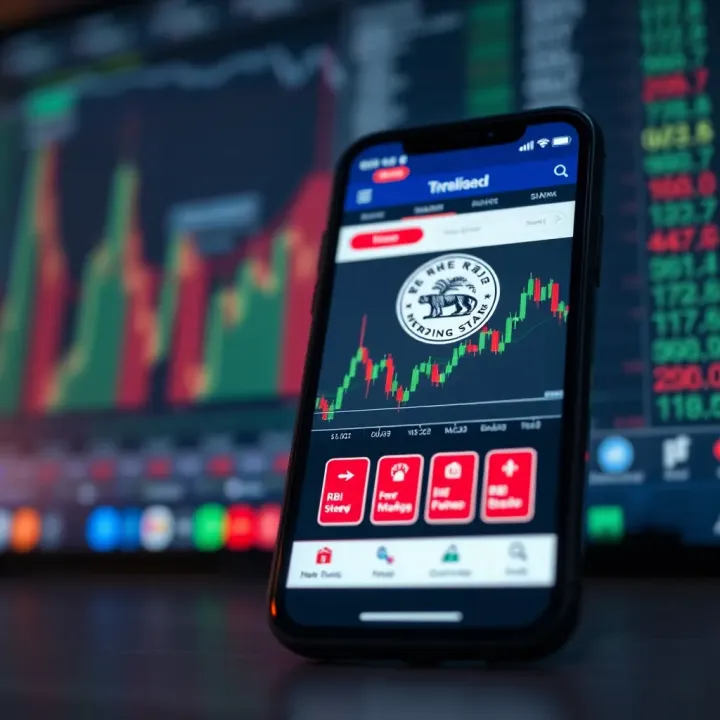
Explore RBI-approved trading apps in India 📱. Understand regulations, safety tips, and find reliable platforms to trade confidently under RBI guidelines.
Based on 12 reviews